







What's Happening?
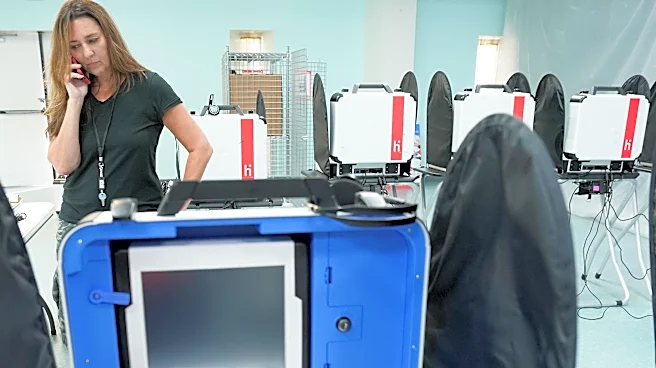
Three precincts in Scott County are scheduled to undergo an Administrative Audit on Thursday due to intermittent issues experienced with DS200 ballot machines. According to Scott County Auditor Kerri Tompkins, the precincts located at Seventh Adventist
School, YWCA, and TBK Sports Complex reported 'Ballot Reject Code' issues during the recent election. An Election Systems and Software (ES&S) representative worked with these precincts throughout Tuesday to address the problems. ES&S will conduct an investigation to determine the cause of the Ballot Reject Code generation. Tompkins stated that while the results could ultimately be accurate, the investigation and audit are necessary to confirm their integrity. The audit will be open to the public, pending approval from the Scott County Board of Supervisors.
Why It's Important?
This audit is crucial for maintaining public confidence in the electoral process and ensuring the integrity of election results in Scott County. Issues with ballot machines, even if intermittent, can raise concerns about accuracy and fairness. By conducting a transparent administrative audit and an investigation by ES&S, election officials aim to verify the accuracy of the vote count and address any potential vulnerabilities in the voting technology. This process is vital for upholding democratic principles and reassuring voters that their ballots are counted correctly. The public's ability to observe the audit further enhances transparency and accountability, which are cornerstones of a healthy democratic system.
What's Next?
The Administrative Audit is scheduled for Thursday at the Training Center in Davenport, with public access pending Board of Supervisors approval. ES&S will proceed with its investigation into the DS200 machines to identify the root cause of the 'Ballot Reject Code' issues. The findings from both the audit and the ES&S investigation will be critical. If discrepancies are found, further actions may be required, potentially including recounts or adjustments to election procedures. Regardless of the outcome, the information gathered will likely inform future election preparations and machine maintenance protocols to prevent similar issues. The transparency of this process is intended to build trust among the electorate.
Beyond the Headlines
Beyond the immediate concern of election accuracy, this incident highlights the broader challenges associated with election technology and its impact on democratic processes. The reliance on electronic voting machines necessitates robust testing, maintenance, and auditing procedures to ensure their reliability. Such incidents can fuel public debate about the balance between technological efficiency and electoral security, potentially leading to calls for different voting methods or increased oversight. The transparency of this audit also underscores the importance of public engagement in democratic processes, as citizen observation can act as a check on official procedures. Ultimately, the handling of these machine issues will contribute to the ongoing narrative about the trustworthiness of election systems in the U.S.