




What's Happening?
In the Democratic Republic of the Congo (DRC), a treatment tent for Ebola patients was set on fire by residents in Mongbwalu, leading to the escape of 18 suspected Ebola cases. The incident occurred after local authorities refused to release the body
of an Ebola victim, causing unrest. Médecins Sans Frontières (MSF) provided the tent, which was empty at the time of the fire, and no injuries were reported. The World Health Organization (WHO) has classified the outbreak's risk level within the DRC as 'very high.' The current outbreak involves the Bundibugyo virus, a rare strain of Ebola with no approved vaccines or targeted treatments. The escape of these individuals significantly increases the risk of community transmission as health officials work to contain the rising infection and mortality rates.
Why It's Important?
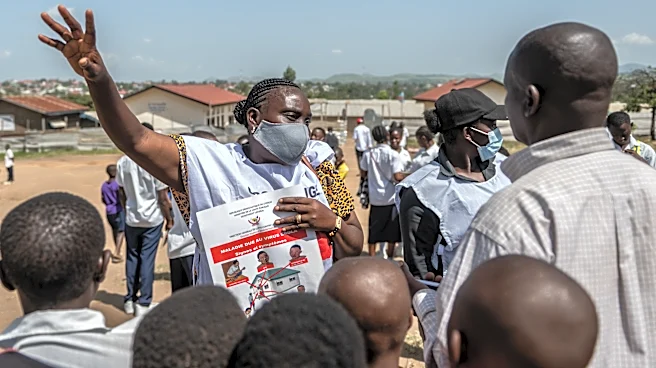
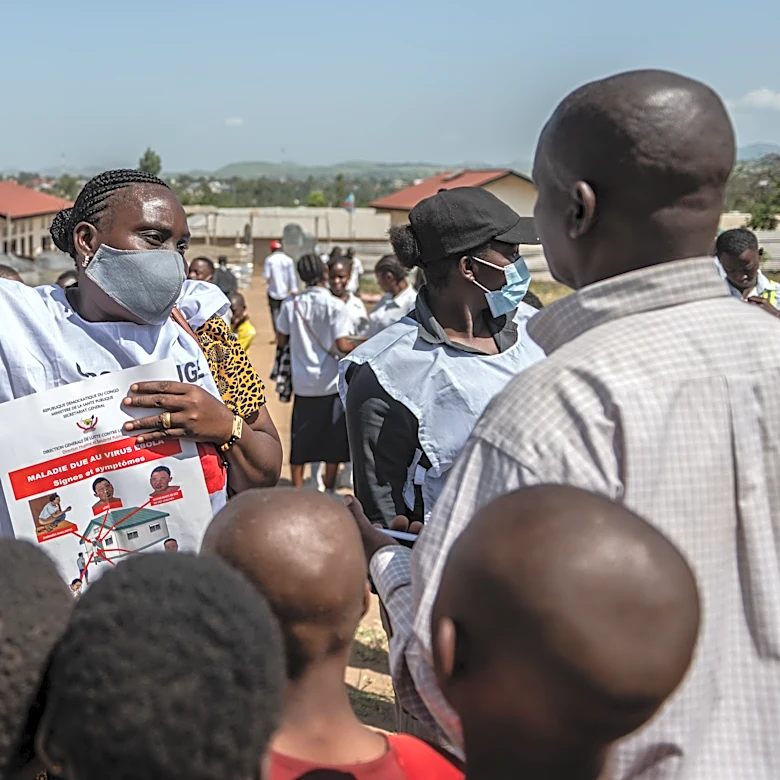
The incident underscores the challenges faced in containing the Ebola outbreak in the DRC, particularly in regions with civil unrest and distrust towards health authorities. The escape of suspected Ebola patients poses a significant risk of spreading the virus within the community, complicating efforts to control the outbreak. The lack of approved vaccines for the Bundibugyo strain further exacerbates the situation, as health officials rely on community engagement and trust-building to manage the crisis. The outbreak's potential to spread beyond the DRC's borders highlights the need for international cooperation and support to prevent a wider epidemic.
What's Next?
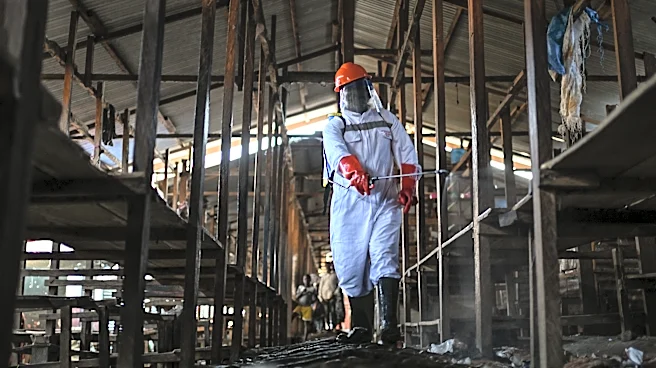
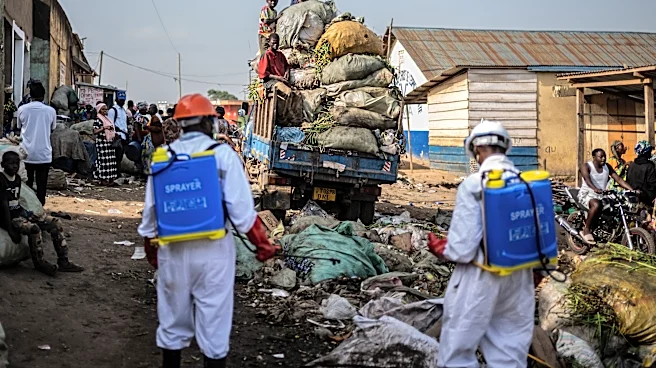
Health organizations, including MSF and WHO, are likely to increase efforts to engage with local communities to rebuild trust and ensure compliance with health protocols. The establishment of a 60-bed Ebola treatment center by MSF is part of ongoing efforts to provide adequate care and containment. International support, including financial aid and resources, will be crucial in managing the outbreak and preventing its spread to neighboring countries. Monitoring and surveillance will be intensified to track and manage suspected cases, while security measures may be reinforced to protect health facilities and personnel.