









What's Happening?
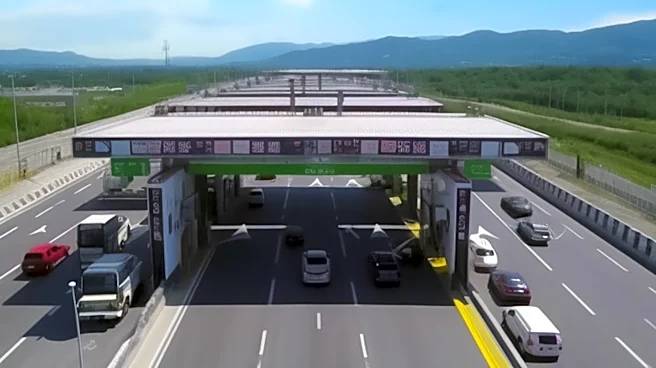
Tolls on the I-66 express lanes outside the Beltway in Northern Virginia have recently reached exceptionally high levels, with some one-way trips costing as much as $30, $60, and even $80. A News4 viewer, Karen from Gainesville, reported paying over $100
for a round trip, including a $74 eastbound trip for 22 miles and a $29 return trip an hour later. These escalating costs are raising concerns among drivers in the D.C. region. Karen expressed frustration that while individual express segment costs are displayed on overhead signs, drivers cannot calculate the total trip cost in real-time and only discover the full amount upon receiving their bill. Although drivers can price out a trip online beforehand, these prices are subject to change by the time they use the lanes due to dynamic pricing, which aims to discourage usage and maintain traffic flow during peak times.
Why It's Important?
The significant increase in I-66 express lane tolls highlights a critical issue for commuters and residents in Northern Virginia, impacting their daily transportation costs and potentially their access to essential services. For individuals like Karen, who use the lanes for critical appointments, these unpredictable and high tolls can become a substantial financial burden, effectively 'money draining out' of their budgets. While the Virginia Department of Transportation (VDOT) states that some toll revenue supports transit services along the I-66 corridor, the current pricing structure raises questions about fairness and the initial agreement surrounding express lanes. The dynamic pricing model, intended to manage congestion, is now creating financial strain for drivers who rely on the predictability and reduced crowding of these lanes, forcing them to weigh convenience against exorbitant costs.
What's Next?
Drivers in Northern Virginia are likely to continue expressing concerns regarding the high and unpredictable tolls on the I-66 express lanes. The current system, where real-time total cost calculation is not possible, may prompt calls for greater transparency or alternative pricing models. The Virginia Department of Transportation (VDOT) may face increased pressure to address these driver complaints, potentially leading to reviews of the dynamic pricing algorithm or communication strategies regarding toll costs. While the option for carpools of three or more people to use the lanes for free remains, it may not be a viable solution for all commuters, particularly those traveling alone for specific purposes. The ongoing debate over fair pricing and the balance between congestion management and affordability will likely continue to be a prominent issue for transportation authorities and the public in the region.
Beyond the Headlines
The soaring I-66 express lane tolls underscore a broader societal challenge in urban planning and infrastructure development: how to manage traffic congestion effectively without disproportionately burdening certain segments of the population. The dynamic pricing model, while economically rational for optimizing traffic flow, raises ethical questions about equitable access to efficient transportation. For those who cannot afford the high tolls, the express lanes become a luxury, potentially exacerbating social and economic disparities by limiting access to faster commutes for work, medical appointments, or other critical needs. This situation could lead to increased reliance on less efficient routes, longer travel times, and greater stress for those unable to pay, highlighting the tension between market-based solutions and public service responsibilities in transportation infrastructure.