



What's Happening?
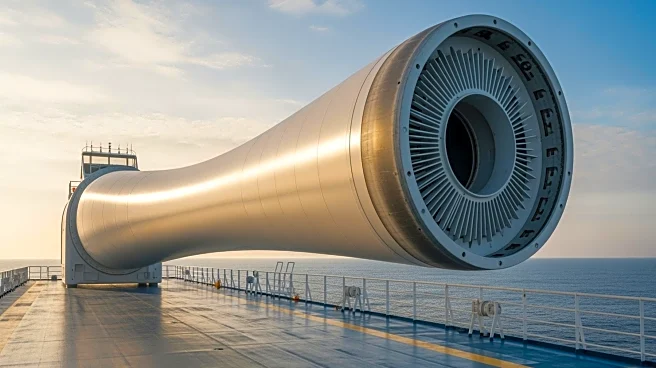
Dajin Heavy Industry has entered into a partnership with Germany's Briese Schiffahrt to develop offshore wind marshalling services at a new terminal in the Port of Cuxhaven, Germany. The memorandum of understanding was signed on November 26, aiming to establish
an international offshore wind industry hub on over 20 hectares of newly built port area. This initiative will leverage Dajin's fleet of deck carrier vessels and Briese's global shipping network to facilitate the handling and transport of offshore wind foundations across Europe. The city of Cuxhaven, located on the North Sea coast, is poised to strengthen its role in Germany's energy transition, offering significant expansion space for large-scale offshore wind activities.
Why It's Important?
The development of an offshore wind hub in Cuxhaven is a significant step in supporting the European Union's renewable energy goals. By enhancing supply chain capacity and reducing logistics interface challenges, the hub will facilitate more efficient offshore wind projects across Europe. This collaboration between Dajin and Briese Schiffahrt underscores the growing importance of international partnerships in advancing sustainable energy solutions. The initiative is expected to bolster Germany's position in the global renewable energy market, contributing to the country's energy transition and climate goals.
What's Next?
The establishment of the offshore wind hub in Cuxhaven will likely attract further investment and development in the region, potentially leading to increased job opportunities and economic growth. As the hub becomes operational, it may serve as a model for similar projects in other parts of Europe, promoting international cooperation in the renewable energy sector. Stakeholders, including government entities and private companies, will be closely monitoring the project's progress and its impact on the European offshore wind industry.
Beyond the Headlines
The partnership between Dajin and Briese Schiffahrt highlights the strategic importance of ports in the renewable energy supply chain. As countries strive to meet climate targets, the role of ports in facilitating the transport and assembly of wind energy components becomes increasingly critical. This development may also prompt discussions on the environmental impact of port expansions and the need for sustainable practices in maritime logistics.