





What's Happening?
Recent overnight attacks between the U.S. and Iran have disrupted the fragile ceasefire established in April. President Trump has confirmed that U.S. strikes on Iran will continue, following the downing of a U.S. Apache helicopter, allegedly by an Iranian
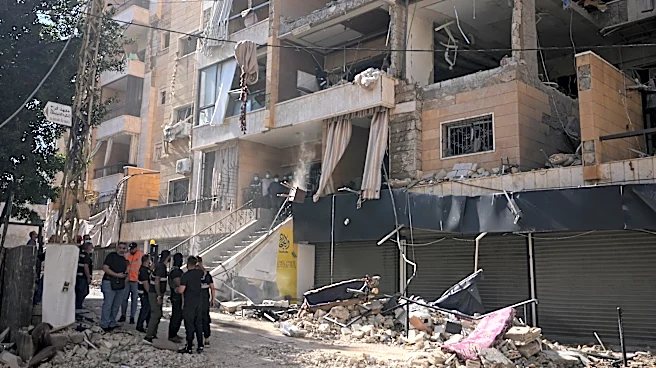
drone. Iran has denied involvement in the helicopter incident. The U.S. Central Command launched multiple strikes on Iranian targets, prompting Iran to retaliate with missile and drone attacks on U.S. military sites in the Middle East. Despite the escalation, no injuries to U.S. personnel have been reported. The situation has led to Iran reassessing its participation in peace talks, with both nations expressing skepticism about the future of diplomatic negotiations.
Why It's Important?
The renewed hostilities between the U.S. and Iran threaten to derail ongoing diplomatic efforts aimed at resolving tensions in the Middle East. The conflict has significant implications for regional security and the global economy, particularly concerning oil supply routes through the Strait of Hormuz. The U.S. military's actions and Iran's responses could lead to broader geopolitical instability, affecting international relations and economic conditions. The situation underscores the challenges of maintaining peace in a region marked by longstanding rivalries and complex political dynamics.
What's Next?
The continuation of military actions by both the U.S. and Iran suggests a prolonged period of uncertainty and potential conflict. Diplomatic efforts may intensify as international stakeholders seek to mediate and prevent further escalation. The U.S. and its allies will likely continue to monitor the situation closely, while regional powers may attempt to influence the outcome. The potential for further retaliatory actions by Iran could lead to increased instability, impacting global energy markets and international security.