






What's Happening?
A recent study highlights a dramatic 96% reduction in rocket launch costs since 1960, driven by technological advancements and the commercialization of space. The study, which analyzed 4,405 launches from 1960 to 2025, found that the average cost of sending
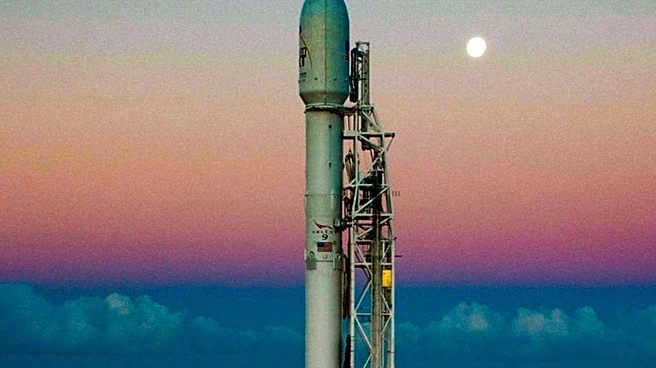
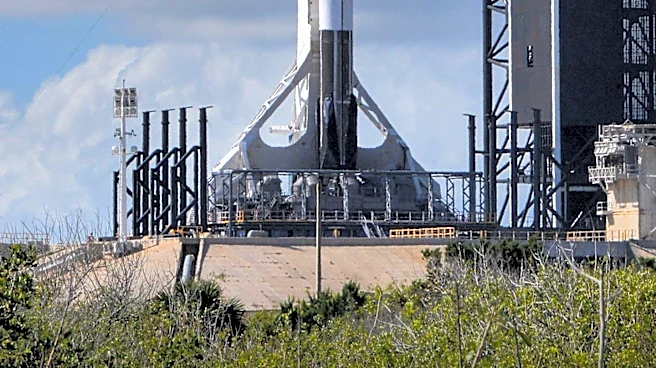
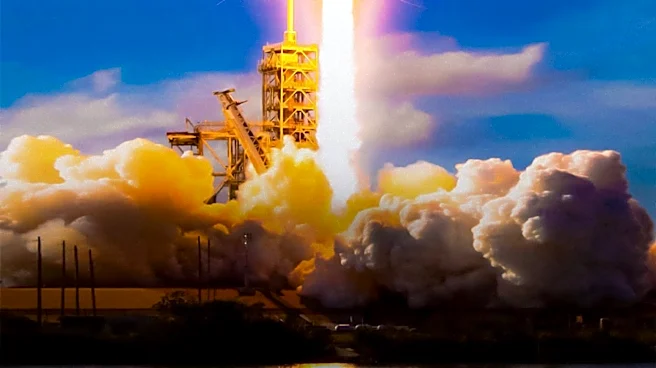
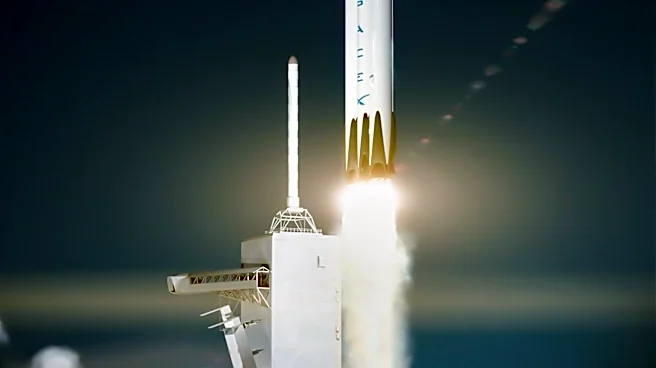
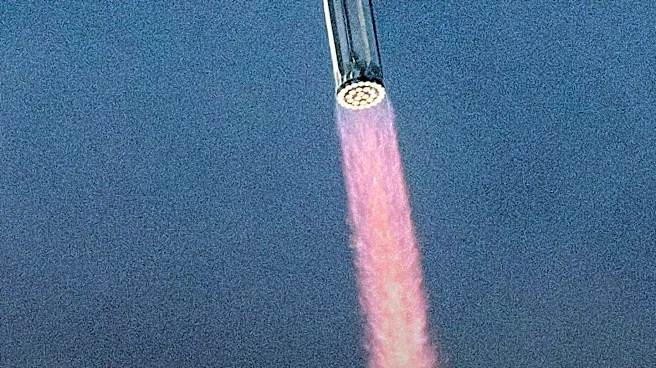
2.2 pounds to orbit dropped from $87,023 in 1960 to $3,868 in 2025. Key factors contributing to this decline include the end of the Cold War and the rise of 'New Space,' which emphasizes commercial space use. The introduction of reusable rockets, such as SpaceX's Falcon 9, has further accelerated cost reductions. Researchers predict that costs could fall to $1,600 per 2.2 pounds by 2030 and $300 by 2040, although challenges like space debris and potential monopolization by companies like SpaceX could impact future trends.
Why It's Important?
The significant reduction in rocket launch costs has profound implications for the space industry and beyond. Lower costs make space more accessible, enabling a wider range of scientific, commercial, and exploratory missions. This democratization of space could lead to increased innovation and economic opportunities, as more entities can afford to participate in space activities. However, the potential for a single company to dominate the market raises concerns about pricing power and competition. Additionally, the growing issue of space debris poses a risk to the sustainability of space operations, necessitating international cooperation and regulation to mitigate potential hazards.
What's Next?
As the trend of decreasing launch costs continues, the space industry is poised for further transformation. Companies and governments will likely explore new opportunities for space exploration, satellite deployment, and commercial ventures. However, addressing challenges such as space debris and market monopolization will be crucial to ensuring the long-term viability and safety of space activities. Policymakers and industry leaders may need to collaborate on developing frameworks and technologies to manage these issues effectively. The ongoing evolution of the space industry will require careful balancing of innovation, regulation, and competition to maximize benefits while minimizing risks.