



What's Happening?
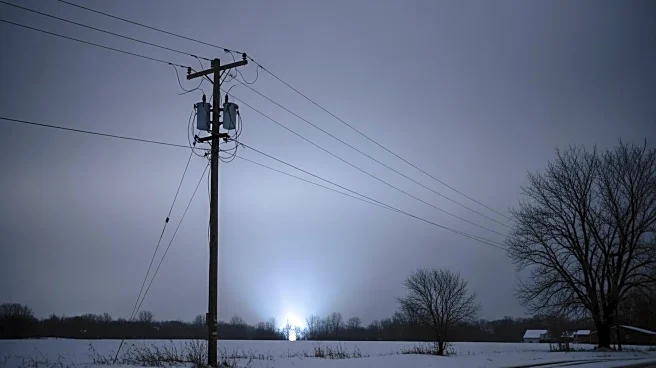
In Mississippi, nearly two weeks after a severe ice storm, thousands of residents remain without power. The storm, which struck late last month, caused significant damage by snapping ice-coated trees and downing power lines, leaving roads nearly impassable.
Barbara Bishop, 79, and her husband George, 85, are among those affected, living in a rural area near Oxford. They have been without power and water, relying on a gas heater for warmth. The storm initially left about 180,000 homes and businesses without power, but as of Friday, approximately 20,000 customers in northern Mississippi were still without electricity. Lafayette County reported the highest number of outages, followed by Tippah, Panola, Yalobusha, and Tishomingo counties. Despite warmer temperatures reaching 70 degrees, ice remains in shaded areas, and downed trees and power lines continue to pose hazards.
Why It's Important?
The prolonged power outages in Mississippi highlight the vulnerability of infrastructure to severe weather events, particularly in rural areas. The situation underscores the need for improved emergency response and infrastructure resilience to prevent such extended disruptions in the future. The impact on residents, especially the elderly and those with limited resources, is significant, as they face challenges in accessing basic necessities like heat and water. The response from organizations like Eight Days of Hope, which has provided meals and cleanup assistance, demonstrates the critical role of community support in disaster recovery. The event also raises questions about the preparedness of utility companies and local governments in handling such crises, potentially prompting policy discussions on infrastructure investment and emergency management strategies.
What's Next?
Efforts to restore power and clear debris are ongoing, with utility companies and volunteers working to address the remaining outages. The situation may lead to increased scrutiny of utility companies' preparedness and response strategies, potentially resulting in regulatory changes or infrastructure investments. Local governments might also consider revising emergency response plans to better support affected communities in future events. Additionally, the experience could drive community initiatives to enhance resilience, such as promoting the use of alternative energy sources or improving communication systems during emergencies.
Beyond the Headlines
The extended power outages in Mississippi may have long-term implications for the state's approach to disaster preparedness and infrastructure resilience. The event could serve as a catalyst for broader discussions on climate change adaptation, as severe weather events become more frequent and intense. It also highlights the importance of community resilience and the role of local organizations in disaster recovery. The experience may encourage other regions to assess their own vulnerabilities and take proactive measures to mitigate the impact of future storms.