
What's Happening?
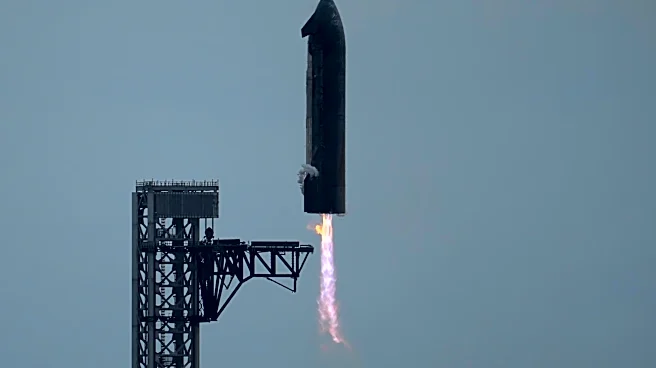
SpaceX has successfully completed a significant milestone with the 15th flight of its Starship rocket, achieving the first-ever capture of the upper stage using the Mechazilla launch tower in Texas. This
mission involved the deployment of 26 Starlink V3 satellites and saw the Starship complete several orbits before its successful return and capture. While the upper stage recovery was a success, the lower-stage Super Heavy booster encountered an issue and was not recovered. This achievement marks a crucial step in SpaceX's development of a fully reusable space transportation system. The company is now evaluating the results of this test flight as it prepares for its next mission, with some reports indicating a potential launch date in December 2026.
Why It's Important?
This historic upper stage capture by SpaceX's Starship is a pivotal development for the U.S. space industry and its long-term goals. The ability to fully reuse both stages of a rocket significantly reduces the cost of space launches, making space access more affordable and frequent. This advancement is critical for the deployment of large satellite constellations like Starlink, which aims to provide global internet coverage. Furthermore, the successful refinement of Starship's reusability is essential for NASA's Artemis missions, as Starship is designated as the lunar module for future human landings on the Moon. This technological leap could accelerate the pace of space exploration and commercial space activities, positioning the U.S. at the forefront of space innovation.
What's Next?
Following this successful test, SpaceX will focus on analyzing the flight data and addressing the issues encountered with the Super Heavy booster to ensure its full reusability in future missions. The company is expected to continue refining its Starship and Super Heavy systems through a series of test flights. The next test flight is anticipated, with some reports suggesting a December 2026 launch, though this is contingent on the evaluation of the latest test results and regulatory approvals. Continued progress in Starship's development is crucial for its role in NASA's Artemis program, which aims to return humans to the Moon. The successful reusability of both rocket stages will be key to achieving the ambitious goals of frequent and cost-effective space travel.
Beyond the Headlines
The successful capture of Starship's upper stage by Mechazilla represents a paradigm shift in space launch technology, moving beyond the traditional expendable rocket model. This innovation has profound implications for the economics of space, potentially democratizing access to orbit and beyond. The long-term vision for Starship includes enabling human missions to Mars, making this reusability a foundational element for interplanetary travel. The ethical considerations surrounding increased space traffic, orbital debris, and the environmental impact of frequent launches will become more prominent as reusability becomes standard. This technological leap also underscores the growing role of private companies in shaping the future of space exploration, potentially leading to new international collaborations and competitions in the space domain.