


What's Happening?
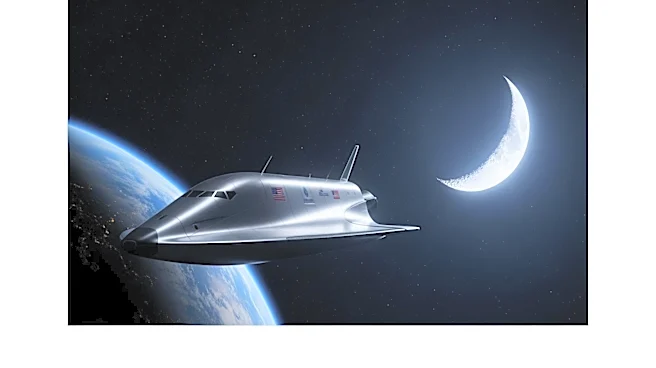
The Artemis II mission has successfully commenced its journey to the Moon following a critical trans-lunar injection (TLI) maneuver. The Orion spacecraft, carrying astronauts Reid Wiseman, Victor Glover, Christina Koch, and Canadian astronaut Jeremy Hansen,
executed the TLI maneuver at 7:49 p.m. Eastern Time. This maneuver, lasting 5 minutes and 50 seconds, was crucial in setting the spacecraft on its trajectory towards the Moon. The spacecraft's main engine, capable of producing up to 6,000 pounds of thrust, was instrumental in this process. During the maneuver, approximately 1,000 pounds of propellant were consumed. The crew is actively engaged in physical exercises using a compact flywheel-based training device, which is essential for maintaining physical health during the mission. Additionally, the crew successfully tested the AVATAR science module. A brief communication glitch occurred due to a configuration error in the ground-based satellite communication system, but it was quickly resolved without impacting the mission.
Why It's Important?
The Artemis II mission marks a significant step in human space exploration, demonstrating the capabilities of deep space travel. This mission is pivotal for NASA's long-term goals of lunar exploration and potential future missions to Mars. The successful execution of the TLI maneuver and the ongoing activities aboard the Orion spacecraft highlight advancements in space travel technology and human endurance in space. The mission's success could pave the way for more ambitious projects, potentially benefiting scientific research and international collaboration in space exploration. The data collected during the lunar flyby, including observations of the Moon's surface and solar phenomena, will contribute to a deeper understanding of the Moon's formation and the broader Solar System.
What's Next?
The Artemis II crew is preparing for a lunar flyby scheduled for April 6, during which they will conduct detailed observations of the Moon's surface. The mission plan includes studying craters, ancient lava flows, and other geological features. A solar eclipse will provide a unique opportunity to observe the Sun's corona and other deep-space objects. These observations are expected to yield valuable scientific data, enhancing our understanding of lunar and solar phenomena. The mission continues to progress towards its goal of advancing human exploration beyond Earth's orbit.