




What's Happening?
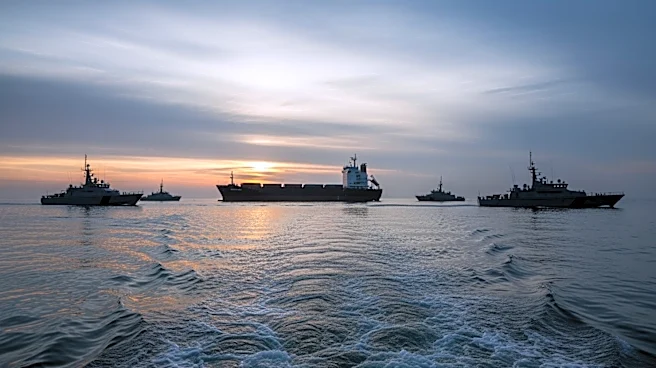
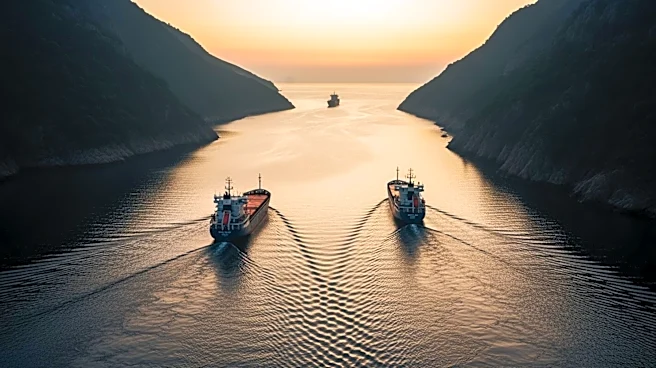
Shipping executives gathered in Athens to discuss the need for clear rules to resume normal operations in the Strait of Hormuz amid ongoing tensions between the United States and Iran. The meeting was part of the Posidonia shipping exhibition, where industry
leaders emphasized the importance of freedom of navigation and the need for a framework to ensure safe passage for vessels. The discussions highlighted the impact of the conflict on seafarers, who have been unable to return home due to the situation. The International Maritime Organisation's Secretary General mentioned the possibility of a 60-day ceasefire, which could facilitate the evacuation of seafarers from the conflict zone.
Why It's Important?
The Strait of Hormuz is a critical chokepoint for global oil shipments, and disruptions in this area can have significant implications for international trade and energy markets. The uncertainty surrounding the passage through the strait affects shipping companies, seafarers, and consumers worldwide, as delays and risks increase costs. A resolution to the conflict and establishment of clear rules would stabilize the shipping industry, reduce insurance costs, and ensure the safety of seafarers. The broader impact includes potential shifts in global oil prices and trade dynamics, depending on how the situation unfolds.
What's Next?
Industry leaders are hopeful for a resolution that would allow for safe navigation through the Strait of Hormuz. The potential ceasefire could be a step towards normalizing operations, but clear rules and agreements are necessary to ensure long-term stability. Stakeholders, including shipping companies and international organizations, will likely continue to push for diplomatic solutions and frameworks that prioritize the safety and efficiency of maritime operations. The situation remains fluid, with ongoing negotiations and potential developments in the geopolitical landscape.