





What's Happening?
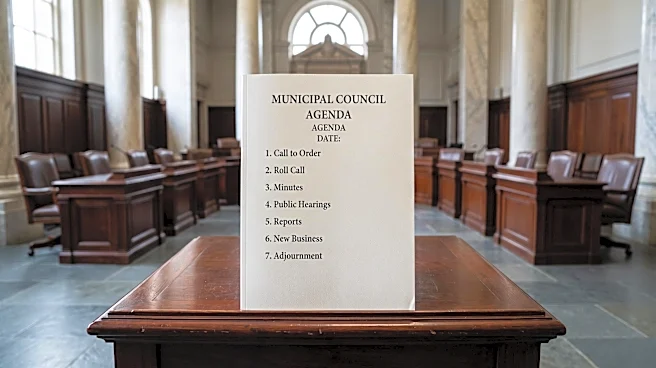
The Alamogordo City Commission is set to convene to clarify the mayor's authority over meeting agendas and to discuss a closed-door complaint against City Manager Robert Stockwell. Mayor Sharon McDonald has requested a more active role in drafting and finalizing
agendas, seeking preliminary drafts and consultation on item modifications. Stockwell, however, argues that this request introduces delays and deviates from past mayoral practices, where mayors occasionally attended agenda review meetings but lacked approval authority. The dispute centers on the interpretation of Rule 5(a) of Resolution 2018-08, which mandates consultation between the city clerk, city manager, and mayor during agenda preparation, but does not specify the extent or timing of the mayor's involvement. The commission will consider whether to amend this rule to explicitly define the mayor's role. Additionally, the commission will enter an executive session to discuss a complaint concerning the City Manager and the Community Development Director, with a potential follow-up vote in open session to authorize an independent investigation.
Why It's Important?
This situation highlights a fundamental tension in commission-manager forms of government regarding the balance of power between elected officials and appointed administrators. Clarifying the mayor's role in agenda setting could significantly impact the efficiency and transparency of city governance in Alamogordo. If the commission grants the mayor more direct control, it could lead to a more politically driven agenda, potentially reflecting public sentiment more closely, as the mayor is the only at-large publicly elected official. Conversely, maintaining the current system, as advocated by the City Manager, emphasizes administrative efficiency and the manager's expertise in daily operations. The outcome will define the scope of mayoral influence and could set a precedent for how similar disputes are handled in other municipalities with comparable governance structures. The complaint against the City Manager further underscores potential internal conflicts that could affect the city's administrative stability and public trust.
What's Next?
The Alamogordo City Commission will hold a meeting on November 17 to address these issues. During this meeting, they are expected to decide on the interpretation or amendment of Rule 5(a) concerning the mayor's role in the agenda process. Public comment is encouraged, particularly as the mayor represents the public at large. Following a closed executive session, the commission may vote in open session to authorize an independent investigation into the complaint against the City Manager and Community Development Director. The commission will also consider a six-month moratorium on new off-premise billboards and other routine business, including accepting a library grant and potentially combining December meetings. The decisions made at this meeting will likely shape the future working relationship between the mayor, city manager, and the commission, and could influence the city's administrative procedures and public policy for the foreseeable future.
Beyond the Headlines
The ongoing debate in Alamogordo reflects a broader challenge faced by many U.S. cities: how to effectively balance democratic representation with administrative efficiency. The mayor, as an elected official, often serves as the public's direct voice, while the city manager is typically tasked with the day-to-day operations and long-term planning, often requiring a degree of insulation from political pressures. This conflict over agenda control is not merely procedural; it touches upon the very essence of who steers the city's direction and how public priorities are translated into action. The outcome could influence public perception of accountability and responsiveness in local government. Furthermore, the complaint against the City Manager, while currently undisclosed in detail, points to potential underlying issues within the city's administration that could impact employee morale, departmental effectiveness, and ultimately, the delivery of public services. The resolution of these matters will be crucial for the city's operational integrity and its relationship with its residents.