








What's Happening?
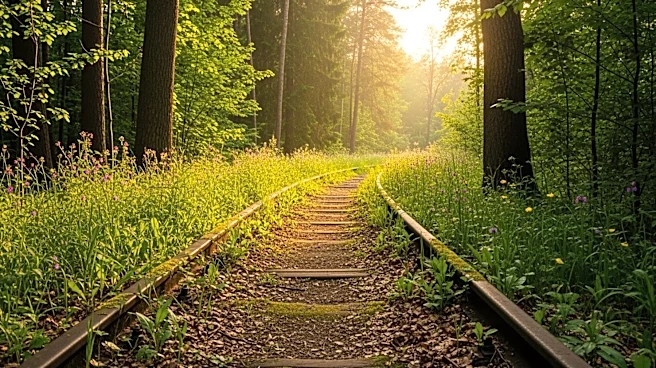
The city of Chicago is set to transform a 1.75-mile abandoned railway corridor on the South Side into the Englewood Nature Trail, a vibrant community space. This project, which has been in planning for several years, aims to create a multi-use path that
will connect homes, parks, and gathering spaces. The trail will stretch from Wallace Street to Hoyne Avenue, crossing 26 viaducts. The initiative is part of the 'Green Healthy Neighborhood Plan,' which focuses on urban agriculture, public art, and job creation. The corridor, originally built by the Pennsylvania Railroad in 1917, has been unused since the early 1960s. The city acquired the land in 2018 and has since secured $26 million in funding from city and federal sources. Construction is scheduled to begin in 2027 and conclude by 2029.
Why It's Important?
The Englewood Nature Trail project is significant as it addresses multiple urban challenges, including the need for green spaces, economic development, and community engagement. By transforming an underutilized area into a community hub, the project aims to improve the quality of life for residents, promote environmental sustainability, and stimulate local economies. The trail will serve as a catalyst for urban agriculture and public art, providing new employment opportunities and fostering a sense of community. Additionally, it aligns with broader city goals related to health, climate, and transportation, potentially setting a precedent for similar urban renewal projects across the country.
What's Next?
The Chicago Department of Transportation and the Department of Planning and Development are leading the project, with ongoing public meetings to gather community feedback. Final design guidelines are expected soon, with a public meeting scheduled for winter to present these plans. As construction is slated for 2027-2029, stakeholders, including local residents and environmental groups, will likely continue to engage in discussions to ensure the project meets community needs and expectations. The project's progress will be closely monitored as it represents a significant investment in urban renewal and community development.