
What's Happening?
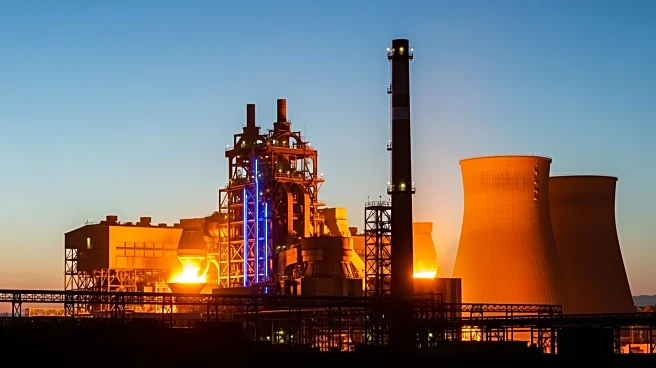
The Australian government, led by Prime Minister Anthony Albanese, has announced a rescue initiative aimed at sustaining operations at the Tomago Aluminium smelter, which is primarily owned by Rio Tinto.
This facility, located in New South Wales, is the largest aluminium smelter in Australia and employs over 1,000 full-time staff and 200 contractors. The smelter faces potential closure due to the expiration of its current power contract in 2028 and the inability to secure affordable energy supplies. The government is working with the New South Wales government and the company to establish a long-term, fixed-price energy supply solution. The initiative is part of a broader effort to address high energy costs affecting Australian smelters during the transition to renewable energy sources.
Why It's Important?
The Tomago Aluminium smelter is a significant player in Australia's industrial landscape, being the state's largest power consumer. Its potential closure could have widespread repercussions across various industries reliant on aluminium. The government's intervention underscores the critical role of aluminium in the economy and the challenges posed by transitioning to renewable energy. The rescue plan not only aims to secure jobs but also to ensure the continuity of aluminium production, which is vital for numerous downstream industries. Additionally, the initiative reflects the government's commitment to supporting industrial operations amid energy transitions, which could set a precedent for future interventions in other sectors facing similar challenges.
What's Next?
The proposed rescue plan involves securing a long-term energy supply and includes concessional finance arrangements to boost renewable energy generation and storage. The government is still determining the total costs of the agreement. The smelter plans to invest at least A$1 billion in capital and major maintenance over the next decade, focusing on decarbonization opportunities. The Australian Workers’ Union has expressed support for the deal, highlighting its importance for the manufacturing sector. The finalization of the energy supply deal and the implementation of the rescue package will be crucial next steps in ensuring the smelter's sustainable future.