
What's Happening?
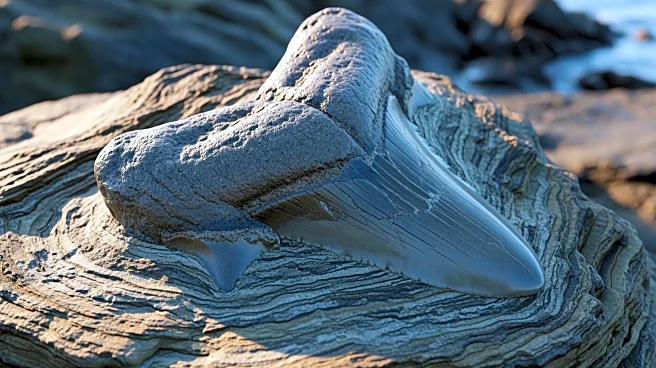
A complete fossil of a prehistoric shark, named Akmonistion zangerli, was discovered in Bearsden, East Dunbartonshire, Scotland. This fossil, found in 1982, is notable for its exceptional preservation,
allowing scientists to study the vertebrae and teeth as they were when the shark was alive 330 million years ago. The discovery was made during an excavation led by Stan Wood, a fossil hunter from the Hunterian Museum in Glasgow. The fossil provides a rare glimpse into the anatomy and behavior of ancient sharks, which are typically studied through fragmented remains. Local enthusiasts are now advocating for a sculpture to commemorate the Bearsden Shark, aiming to raise awareness and preserve the memory of this significant paleontological find.
Why It's Important?
The discovery of the Bearsden Shark fossil is significant for paleontology, offering a unique opportunity to study a complete specimen from a period when sharks were abundant. This find enhances understanding of prehistoric marine ecosystems and the evolutionary history of sharks. The preservation of the fossil, including its last meal, provides insights into the diet and environment of ancient marine life. The initiative to create a sculpture in Bearsden highlights the importance of public engagement in preserving and promoting scientific heritage. Such efforts can inspire interest in paleontology and underscore the value of local historical discoveries in contributing to global scientific knowledge.
What's Next?
The proposal to install a sculpture in Bearsden aims to ensure the story of the Bearsden Shark is remembered by future generations. This initiative could attract visitors and boost local tourism, while also serving as an educational tool. Continued research on the fossil may yield further insights into the life and extinction of ancient sharks. The Bearsden Shark Group's efforts to promote the fossil's significance could lead to increased public interest and support for paleontological research. As new findings emerge, they may contribute to a broader understanding of prehistoric life and the factors that led to the extinction of species during the Triassic period.
Beyond the Headlines
The Bearsden Shark fossil raises questions about the preservation of soft tissues in fossils, which is rare due to decomposition. The unique conditions that led to the fossil's preservation, such as low oxygen levels and rapid burial in mud, offer valuable lessons for paleontologists studying other ancient remains. The discovery also highlights the role of local communities in uncovering and preserving historical artifacts. The potential installation of a sculpture could serve as a cultural landmark, fostering a sense of pride and identity within the community. This case exemplifies how scientific discoveries can intersect with cultural heritage, emphasizing the importance of interdisciplinary collaboration in preserving history.