





What's Happening?
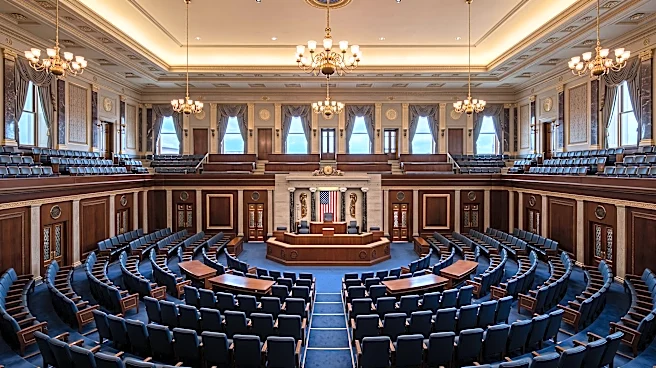
House Minority Leader Hakeem Jeffries (D-N.Y.), House Minority Whip Katherine Clark (D-Mass.), and House Democratic Caucus Chair Pete Aguilar (D-Calif.) have referred Representatives Jared Golden (D-Maine) and Marie Gluesenkamp Perez (D-Wash.) to the House Democratic Caucus’
Committee on Caucus Rules. This action follows Golden and Gluesenkamp Perez breaking ranks with their party by voting with Republicans on a procedural rule, H. Res. 1499, which advanced an anti-socialism resolution and several other GOP-backed measures. The rule passed 210-208, with the two Democratic votes being crucial for its passage, as five Republicans opposed it. Rep. Golden stated his vote was to advance the Northeast Lobstermen Protection Act, a bill critical to his district's lobster industry, which later passed the House 219-196. This legislation aims to extend a moratorium on certain regulations intended to protect the North Atlantic right whale until 2035, allowing for more data collection.
Why It's Important?
This incident highlights significant internal divisions within the Democratic Party and the complexities of legislative strategy in a closely divided Congress. The referral of Representatives Golden and Gluesenkamp Perez to the caucus rules committee signals a serious response from Democratic leadership, indicating that breaking party lines on procedural votes, especially those enabling opposing party initiatives, is not taken lightly. This move could lead to disciplinary actions, such as stripping committee assignments, which would impact the members' influence and legislative effectiveness. For the Democratic Party, it underscores the challenge of maintaining unity while accommodating the diverse needs and priorities of its members, particularly those representing swing districts or specific regional interests. For the U.S. legislative process, it demonstrates how individual members can leverage procedural votes to advance local concerns, even if it means defying party leadership and potentially aiding the opposition's agenda. The passage of the Northeast Lobstermen Protection Act, facilitated by this procedural vote, also illustrates the direct impact of such actions on specific industries and environmental regulations.
What's Next?
The Committee on Caucus Rules will now deliberate on the actions of Representatives Golden and Gluesenkamp Perez. Potential outcomes could range from formal reprimands to more severe penalties, such as the removal from committee assignments, which would significantly diminish their legislative power. This internal party process will likely be closely watched as it could set precedents for how dissent is handled within the Democratic caucus in the future. Both Golden and Gluesenkamp Perez have defended their votes, emphasizing their commitment to their constituents' interests, suggesting that they may resist any disciplinary measures. The incident could also influence future legislative dynamics, potentially making it more challenging for Democratic leadership to enforce party discipline on procedural votes. Furthermore, the debate over the Northeast Lobstermen Protection Act and its environmental implications is likely to continue, with environmental groups potentially scrutinizing the extended moratorium on regulations.
Beyond the Headlines
This event delves into the deeper tension between party loyalty and constituent representation in the U.S. political system. While party discipline is often seen as essential for legislative efficiency and advancing a coherent agenda, individual lawmakers are also elected to represent the specific needs and interests of their districts. When these two imperatives conflict, as seen with Golden's vote for the lobster industry, it exposes the inherent friction in a representative democracy. The threat of disciplinary action against dissenting members raises questions about the balance of power within political parties and the extent to which leadership can or should control individual votes. This dynamic can lead to a more fractured legislative environment, where bipartisan cooperation on specific issues might come at the cost of internal party cohesion. It also highlights the influence of specific industries and regional concerns on national policy, demonstrating how local economic pressures can shape broader political outcomes and challenge established party lines.