



What's Happening?
APRA AMCOS and SOCAN, two major rights societies representing songwriters, composers, and music publishers in Australia, New Zealand, and Canada, have issued a joint statement emphasizing the need for middle-power nations to actively shape the development
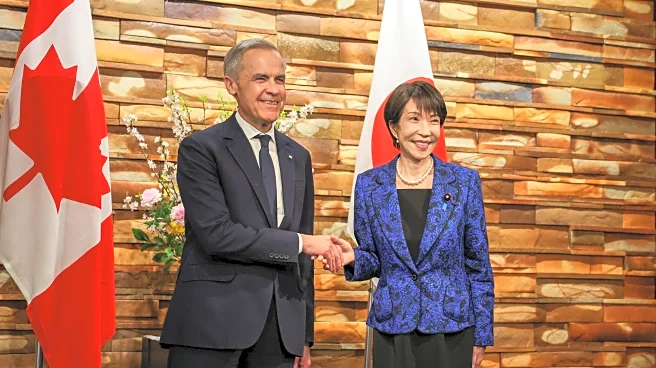
of artificial intelligence (AI) in the creative economy. This collaboration aligns with discussions between Australian Prime Minister Anthony Albanese and Canadian Prime Minister Mark Carney, who recently met to discuss strategic cooperation in various sectors, including AI. The statement highlights the importance of treating cultural wealth as a sovereign asset and ensuring that AI development benefits creators rather than concentrating returns in the hands of a few global technology platforms. The societies advocate for a framework that includes consent, transparency, and fair remuneration for creators, aiming to enhance human creativity rather than diminish it.
Why It's Important?
The collaboration between APRA AMCOS and SOCAN is significant as it addresses the growing influence of AI on the creative industries, which are vital to the economies of both Australia and Canada. By advocating for a framework that protects creators' rights and ensures fair compensation, these societies aim to prevent the monopolization of AI benefits by large tech companies. This initiative could set a precedent for other nations, promoting a balanced approach to AI development that respects cultural and intellectual property rights. The focus on Indigenous Cultural Intellectual Property further underscores the commitment to protecting diverse cultural expressions from exploitation by AI systems.
What's Next?
The next steps involve both societies working closely with their respective governments to develop and implement the proposed AI framework. This includes establishing licensing infrastructures and partnerships that facilitate a fair distribution of AI-generated economic returns. The collaboration may also lead to international discussions and agreements, as other countries observe and potentially adopt similar frameworks. The emphasis on Indigenous Cultural Intellectual Property protection suggests that future policies will need to address the unique challenges faced by Indigenous communities in the context of AI.