
What's Happening?
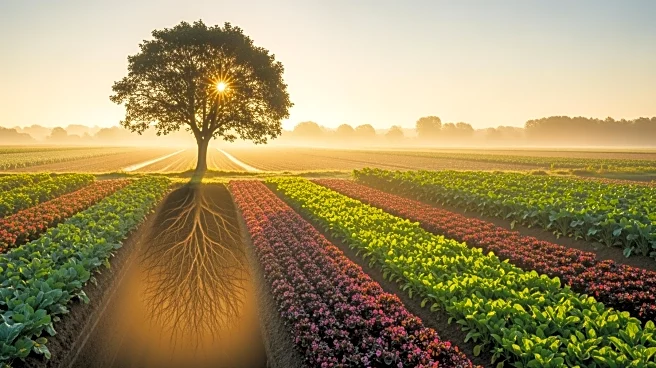
The Galilee Eco Center is embarking on a project to establish a regenerative agriculture and ecological education campus in Israel's Upper Galilee. This initiative, which coincides with the Jewish New
Year of the Trees, Tu B'Shvat, aims to integrate sustainable farming practices with educational programs. The project, inspired by similar American models, seeks to promote environmental responsibility and Jewish learning. Despite initial success in fundraising and securing land, the project faces challenges due to Israel's complex agricultural regulations and bureaucratic hurdles. The center plans to offer educational programs and volunteer opportunities, focusing on regenerative farming and community engagement.
Why It's Important?
This initiative is significant as it represents a shift towards sustainable agriculture in a region traditionally dominated by monoculture. By integrating ecological education with farming, the Galilee Eco Center aims to foster a deeper connection to the land and promote environmental stewardship. The project also highlights the potential for cross-cultural collaboration, drawing on expertise from both North America and Israel. If successful, it could serve as a model for similar initiatives, contributing to the global movement towards sustainable agriculture and environmental education.
What's Next?
The Galilee Eco Center plans to expand its board and partnerships to navigate the regulatory challenges and advance the project's development. The center aims to establish itself as a hub for ecological education and community engagement, offering programs that integrate Jewish learning with sustainable practices. As the project progresses, it will likely seek further collaboration with international partners to enhance its impact and reach.
Beyond the Headlines
The establishment of the Galilee Eco Center underscores the growing importance of regenerative agriculture as a response to environmental challenges. By promoting sustainable practices and education, the center is contributing to a broader cultural shift towards environmental responsibility. This initiative also reflects a commitment to preserving cultural and ecological heritage, aligning with the values of Tu B'Shvat and the Jewish tradition of stewardship of the land.