


What's Happening?
The U.S. Department of Justice has launched a federal civil rights investigation into the shooting of Alex Pretti, a Minneapolis resident, by Border Patrol officers. Deputy Attorney General Todd Blanche announced the investigation, emphasizing the need
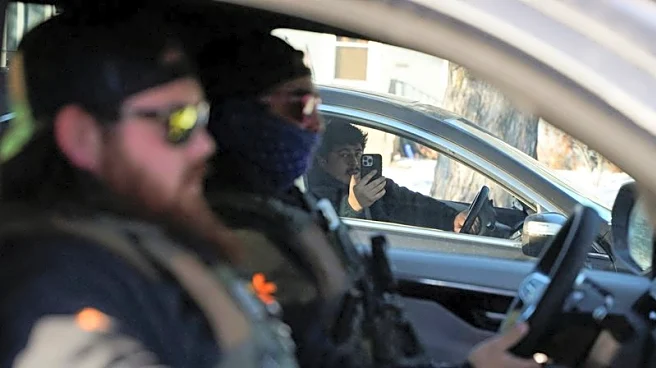
to understand the events leading up to the incident. The decision to investigate comes amid public scrutiny and demands for transparency. The Department of Homeland Security has assigned the FBI to lead the investigation, with Homeland Security Investigations providing support. The shooting, which involved two officers firing at Pretti, has sparked controversy, especially after video evidence contradicted initial claims that Pretti brandished a weapon. Instead, the footage showed Pretti holding a mobile phone as officers tackled him. Pretti, who had a legal permit to carry a concealed firearm, did not appear to reach for his weapon during the incident.
Why It's Important?
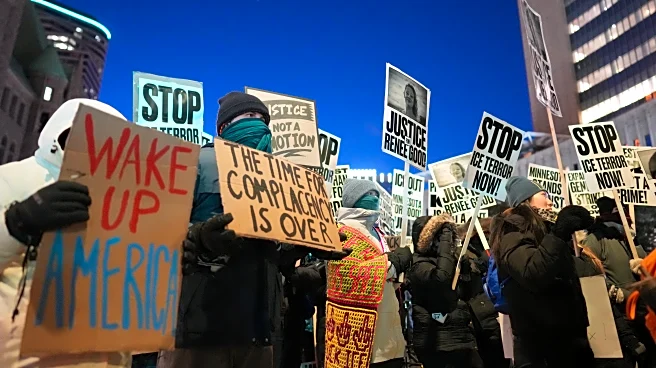
This investigation is significant as it addresses concerns about law enforcement accountability and the use of force by federal officers. The case has drawn national attention, highlighting issues of civil rights and the treatment of individuals by immigration enforcement agencies. The outcome of this investigation could influence public trust in federal law enforcement and impact future policies regarding the use of force. The involvement of the FBI underscores the gravity of the situation and the need for a thorough and impartial examination of the facts. The case also raises questions about the transparency of federal investigations and the role of video evidence in shaping public perception and legal outcomes.
What's Next?
The FBI's investigation will likely involve gathering evidence, interviewing witnesses, and reviewing video footage to determine the circumstances surrounding Pretti's death. The findings could lead to policy changes within federal law enforcement agencies or result in legal actions against the officers involved. Public and political reactions are expected as the investigation progresses, with potential implications for immigration enforcement practices and civil rights protections. The case may also prompt discussions on the need for reforms in how federal agencies handle similar incidents in the future.