
What's Happening?
President Trump has stated that Iran's enriched uranium would be transferred to the United States under a developing agreement between Washington and Tehran. This announcement comes as Israeli officials
have been briefed on the talks, indicating optimism for a potential deal. The agreement under discussion is not a final deal but a one-page framework that would serve as the basis for further negotiations. Key elements of the agreement include Iran's commitment to remove its stockpile of uranium enriched to 60% and halt uranium enrichment for 15 years. In return, Iran would receive the removal of some sanctions and the release of billions of dollars in frozen funds. The talks, mediated by Pakistan's army chief, are expected to conclude with Iran's official response within 48 hours.
Why It's Important?
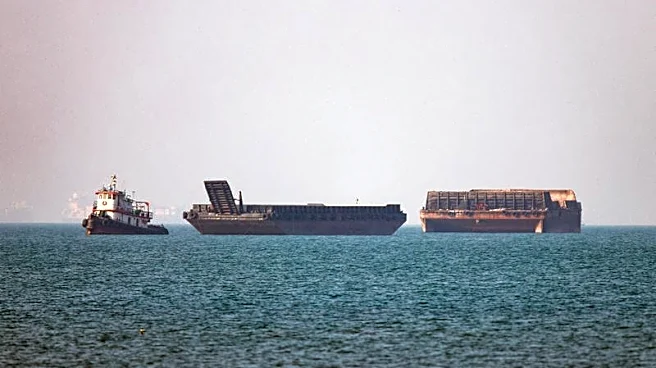
The potential agreement between the U.S. and Iran could significantly impact international relations and regional stability. For the U.S., securing a deal that limits Iran's nuclear capabilities would be a diplomatic victory, potentially easing tensions in the Middle East. The removal of sanctions and release of frozen funds could provide economic relief to Iran, which may influence its domestic and foreign policies. However, the agreement's implications for Israel, a key U.S. ally, remain uncertain, as the deal includes clauses that may not align with Israeli interests. The reopening of the Strait of Hormuz is also crucial for global oil transit, affecting international markets.
What's Next?
Iran is expected to provide an official response to the proposed agreement within 48 hours. If accepted, the framework could lead to more detailed negotiations on nuclear and regional security issues. The U.S. and Iran will need to address concerns from other stakeholders, including Israel and regional allies, to ensure broader acceptance of the deal. The outcome of these negotiations could influence future U.S. foreign policy and its approach to Middle Eastern diplomacy.