


What's Happening?
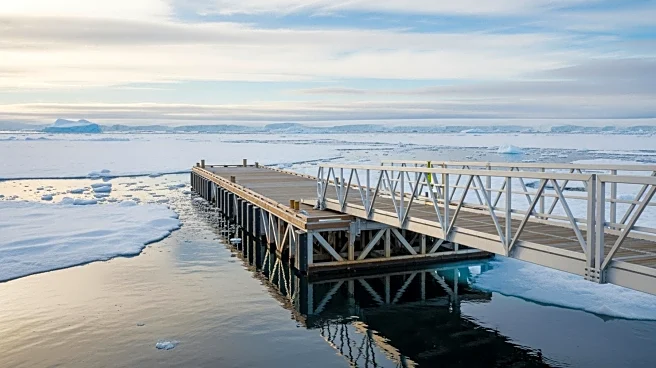
The U.S. McMurdo Station in Antarctica has received a new permanent docking pier, marking a significant milestone in modernizing the logistics infrastructure for U.S. Antarctic research operations. The McMurdo Docking Pier, constructed by Gunderson Marine
& Iron in Portland, Oregon, was designed by Glosten for the U.S. Army Corps of Engineers. It features a raked hull to ride on top of sea ice and is engineered for long-term durability in polar conditions. The pier replaces the traditional seasonal ice pier, providing more reliable and lower-maintenance mooring infrastructure to support cargo operations at the largest research facility in Antarctica. The pier's journey to Antarctica involved a 9,159 nautical mile voyage across the Pacific and Southern Oceans, enduring severe weather conditions, which underscores its robust engineering.
Why It's Important?
The installation of a permanent docking pier at McMurdo Station is crucial for enhancing the efficiency and reliability of U.S. Antarctic research operations. This infrastructure upgrade supports the annual resupply missions known as Operation Deep Freeze, which are vital for maintaining the station's operations. The new pier allows for more efficient cargo handling, which is essential given the harsh and unpredictable Antarctic environment. This development reflects the U.S. commitment to supporting scientific research in extreme conditions and showcases the strength of American shipbuilding. The improved logistics infrastructure will likely facilitate more consistent and effective research activities, contributing to the global understanding of polar regions.
What's Next?
With the new docking pier in place, McMurdo Station is expected to see improved efficiency in its resupply missions. The Military Sealift Command will continue to play a crucial role in these operations, ensuring that the station remains well-supplied and operational. The enhanced infrastructure may also open opportunities for expanded research activities, as the station can now handle larger and more complex cargo shipments. This could lead to increased collaboration with international research teams and potentially more significant scientific discoveries in the future.