

What's Happening?
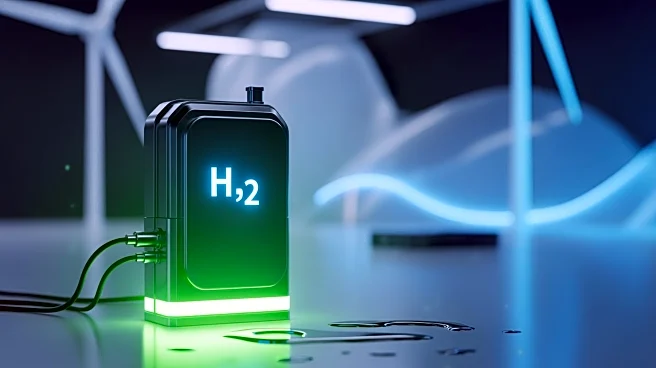
The European Union-funded SUPREME project is working to address the high costs and environmental concerns associated with green hydrogen production. Green hydrogen, produced through proton exchange membrane (PEM) electrolysis, is seen as a crucial component
in reducing reliance on fossil fuels. However, current production methods are expensive and rely on per- and polyfluoroalkyl substances (PFAS), which pose environmental and health risks. The project, led by the University of Southern Denmark in collaboration with Graz University of Technology and other partners, aims to develop a PFAS-free electrolysis system that is more efficient and uses fewer critical raw materials like iridium. The initiative seeks to make green hydrogen more affordable and sustainable, thereby enhancing its attractiveness for industrial applications and energy storage.
Why It's Important?
The development of a more cost-effective and environmentally friendly method for producing green hydrogen could significantly impact various industries. Hydrogen is already a key raw material in sectors such as ammonia and methanol production and the steel industry. By reducing the reliance on harmful chemicals and lowering production costs, the SUPREME project could accelerate the adoption of green hydrogen, making it a viable alternative to fossil-based hydrogen. This shift could facilitate the green transition, support renewable energy storage, and reduce the carbon footprint of heavy industries. The project's success could also set a precedent for future innovations in clean energy technologies.
What's Next?
The SUPREME project will continue over the next three years, focusing on developing PFAS-free materials and advanced membranes for electrolysis systems. Researchers are evaluating the performance of these materials to ensure they meet industrial standards for durability and efficiency. Additionally, efforts are underway to reduce the use of iridium, a costly metal, by up to 75% and to develop recycling methods to recover iridium. The project's progress will be closely monitored by stakeholders in the energy and industrial sectors, as its outcomes could influence future policies and investments in green hydrogen technology.