







What's Happening?
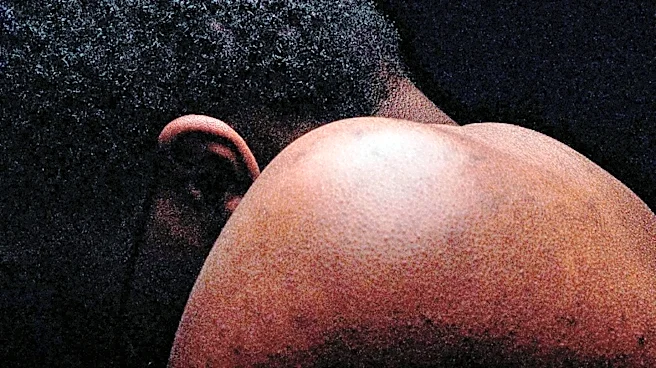
The Haitian Revolution, a pivotal event in global history, is being reexamined through a sensory and bodily perspective, moving beyond traditional analyses of declarations and political texts. This approach seeks to understand the lived experiences of enslaved
people in Saint-Domingue, the French colony where the uprising began in August 1791. Historians are now considering how bodily experiences, such as exhaustion, punishment, illness, and healing, shaped the revolution. The Code Noir, which legally classified enslaved people as 'movables' and permitted physical violence, highlights the centrality of the body in the colonial system. Medical practices, involving both European physicians and enslaved healers, also played a complex role, sometimes preserving lives and labor power for owners, while also fostering independent knowledge among the enslaved. The historical record, particularly concerning events like the Bois Caïman ceremony, presents challenges due to its retrospective and contested nature, making it difficult to reconstruct sensory details directly. However, the language of the 1804 Declaration of Independence, with its references to 'the yoke' and 'blood,' underscores the physical subjection and the struggle for survival that defined the revolution.
Why It's Important?
This reinterpretation of the Haitian Revolution is crucial for a more comprehensive understanding of the struggle for freedom and its enduring legacy. By focusing on sensory and bodily experiences, historians can illuminate the profound human cost of slavery and the deeply personal nature of the fight for liberation. This perspective challenges purely political or economic interpretations, revealing how the revolution was fundamentally about reclaiming bodily autonomy and dignity. It highlights the resilience and agency of enslaved people who, despite extreme oppression, developed their own systems of healing and resistance. Understanding the physical realities of slavery and the revolution can inform contemporary discussions about human rights, historical trauma, and the ongoing impacts of colonialism. Furthermore, it underscores the importance of diverse historical sources and methodologies in reconstructing the past, especially when traditional archives may be incomplete or biased.
What's Next?
Future historical research on the Haitian Revolution is likely to continue exploring the intersection of bodily experience, memory, and the archive. Scholars will further investigate how embodied and oral practices, such as oath-taking and collective communication, were recorded and interpreted in historical documents. This will involve a critical examination of existing sources, acknowledging their limitations and biases, while also seeking new ways to infer the sensory realities of the past. The focus will remain on understanding how freedom was not just a legal or political concept but a lived experience, constantly negotiated and redefined. This approach may also lead to comparative studies with other slave revolts and liberation movements, enriching our understanding of the universal aspects of human struggle against oppression and the diverse ways in which freedom is conceptualized and achieved.
Beyond the Headlines
The emphasis on sensory and bodily experiences in the Haitian Revolution delves into profound ethical and cultural dimensions. Ethically, it forces a confrontation with the brutal realities of slavery, moving beyond abstract discussions to the visceral impact on human beings. It underscores the moral imperative to acknowledge and understand the suffering of those subjected to extreme dehumanization. Culturally, this approach highlights the resilience of African traditions and knowledge systems, particularly in healing and resistance, which persisted and evolved under colonial rule. It also sheds light on how collective memory and ritual, even when historically contested, play a vital role in shaping national identity and historical narratives. This re-evaluation encourages a deeper appreciation for how the body itself can be a site of both oppression and liberation, influencing long-term shifts in how history is written and understood, particularly concerning marginalized voices and experiences.