






What's Happening?
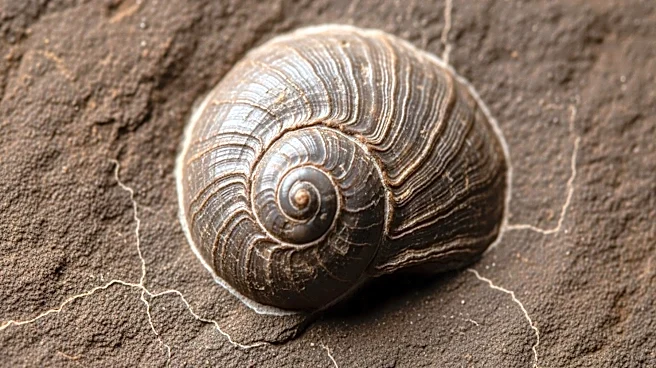
A recent study published in the journal Proceedings of the Royal Society B has reclassified a fossil previously identified as the world's oldest octopus. The fossil, Pohlsepia mazonensis, found in the Mazon Creek fossil beds of Illinois, is now believed
to be more closely related to a nautilus. This 300-million-year-old fossil was initially thought to be an octopus due to its appearance, but further analysis revealed it had more teeth than typical octopuses, aligning it with nautiloids. The study, led by University of Reading zoologist Thomas Clements, used advanced imaging techniques to examine the fossil's internal structure, leading to this new classification. This finding corrects a long-standing misidentification and provides new insights into the evolutionary history of cephalopods.
Why It's Important?
The reclassification of Pohlsepia mazonensis as a nautilus relative rather than an octopus has significant implications for the understanding of cephalopod evolution. It highlights the challenges in fossil interpretation and the importance of advanced imaging techniques in paleontology. This discovery also addresses a 210-million-year gap in the fossil record of octopuses, prompting a reevaluation of cephalopod evolutionary timelines. By clarifying the lineage of this ancient creature, the study contributes to a more accurate understanding of marine life evolution and the diversity of ancient ecosystems.