

What's Happening?
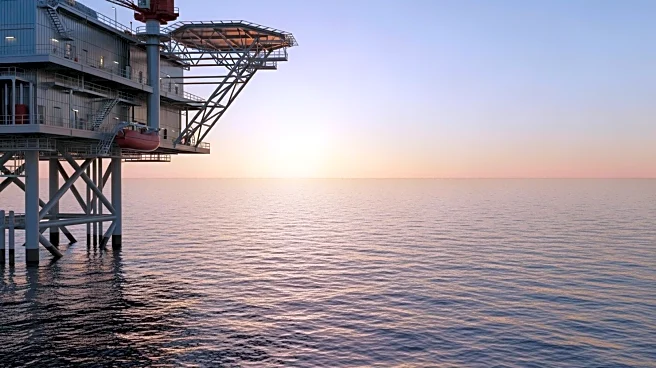
The Syrian Petroleum Company has entered into a memorandum of understanding with U.S. energy giant Chevron and Qatar-based Power International Holding to develop Syria's first offshore oil and gas field. The agreement, signed in Damascus with the presence
of the U.S. special envoy to Syria, Tom Barrack, aims to strengthen strategic partnerships in the energy sector. This deal marks a significant step for Syria as it seeks to expand its hydrocarbon production and attract foreign investment. The Syrian government, which regained control over oil-rich regions from Kurdish-led fighters, is attempting to revive its economy after years of conflict. The CEO of the Syrian Petroleum Company, Youssef Kabalawi, highlighted the importance of this deal, estimating that drilling could begin before the summer and may take up to four years to reach the gas reserves.
Why It's Important?
This development is crucial for Syria's economic recovery efforts, as the country has been severely impacted by a prolonged conflict that devastated its oil and gas sectors. Prior to the conflict, oil was a major economic pillar, contributing significantly to the national budget. The involvement of major international players like Chevron and a Qatari investor indicates a potential shift in Syria's economic landscape, opening doors for further foreign investments. This could lead to increased energy production, job creation, and a boost in government revenues, which are essential for rebuilding the war-torn nation. Additionally, the deal may influence regional energy dynamics, as Syria positions itself as a player in the offshore energy market.
What's Next?
The next steps involve mobilization and drilling activities, expected to commence before the summer. The Syrian government will likely focus on ensuring the security and stability of the regions involved in the exploration to facilitate smooth operations. The success of this project could attract more international investors, further aiding Syria's economic recovery. However, geopolitical tensions and regional stability will play a critical role in the project's progress and the broader implications for the Middle East's energy sector.