





What's Happening?
U.S. Senator Mike Rounds (R-SD), alongside Senator Amy Klobuchar (D-MN), has introduced the Rebuilding America’s National Cow Herd (RANCH) Act on August 19, 2026. This bipartisan legislation aims to address the smallest national cow herd size in over
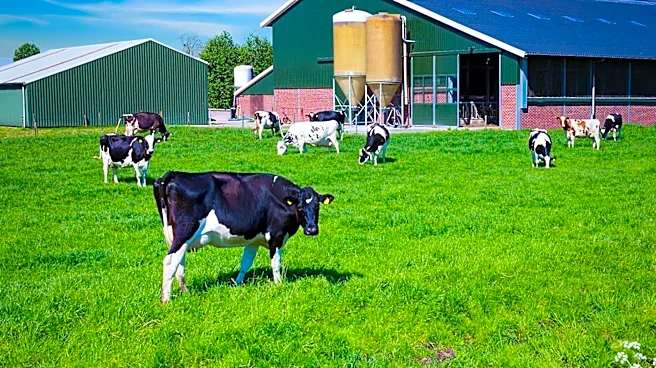
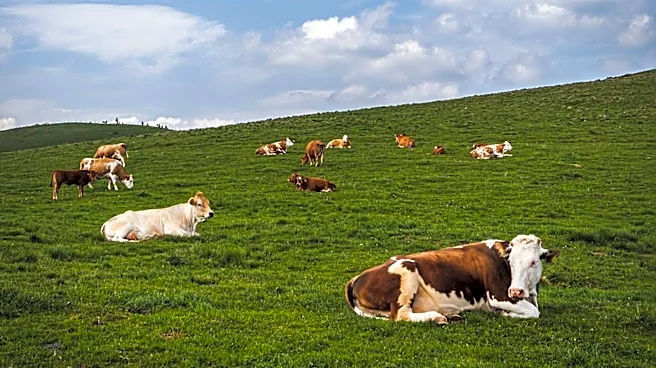
70 years by creating a voluntary grazing land restoration program. The program seeks to convert up to 20 million acres of marginal cropland into grasslands suitable for grazing, which could support an estimated two to four million additional beef cows. Senator Rounds emphasized that the act provides producers with the tools to restore eligible marginal cropland into grasslands, allowing them to utilize their land in the most effective way for their individual operations. The RANCH Act is designed to strengthen American food security by expanding the domestic beef supply and reducing reliance on imported beef, while also creating demand for American-grown grain and forage. The initiative has garnered support from various agricultural and conservation organizations, including the South Dakota Cattlemen’s Association and the Minnesota State Cattlemen’s Association.
Why It's Important?
The RANCH Act is significant for several reasons, primarily its potential to bolster the U.S. beef industry and enhance national food security. With the national cow herd at its lowest point in over seven decades, the legislation directly addresses a critical supply-side issue that impacts beef prices and availability for American consumers. By expanding grazing land, the act aims to increase domestic beef production, which could lead to more stable and potentially lower beef costs in the long term, as noted by Senator Klobuchar. Furthermore, the program's focus on converting marginal cropland into grasslands offers environmental benefits, including improved soil health, water quality, and expanded wildlife habitats, as highlighted by various conservation groups. The act also seeks to support commodity prices for row crop producers by modestly tightening the grain supply through a reduction in planted acres, creating a more balanced agricultural ecosystem. This initiative could also reinvigorate rural communities through increased livestock production and grain demand, making U.S. farmers and ranchers more competitive globally.
What's Next?
The RANCH Act will proceed through the legislative process, requiring passage in both the Senate and the House of Representatives to become law. If enacted, the program will establish a voluntary grazing land restoration initiative with specific eligibility criteria for acreage, prioritizing beginning farmers and ranchers, existing livestock operations, and land with wildlife habitat potential. Enrolled land would be established into perennial grass and forb cover appropriate for the region and intended grazing use, under 10-15 year non-renewable contracts. Upon expiration, the land would automatically be enrolled into grassland CRP. The program is capped at 20 million acres, though this could be adjusted if there's an estimated shortage of commodities grown on targeted cropland. Financial incentives, including annual rental payments and cost-share for cover establishment, will be offered to producers, with increased support for beginning farmers and ranchers. The broad support from agricultural and conservation organizations suggests a strong coalition advocating for its passage and implementation.
Beyond the Headlines
Beyond its immediate economic and agricultural impacts, the RANCH Act touches upon deeper implications for land use, environmental stewardship, and the future of American ranching. The emphasis on converting marginal cropland to grazing land represents a strategic shift towards more sustainable agricultural practices, recognizing the ecological benefits of grasslands in carbon sequestration, biodiversity, and water management. This approach could foster a more resilient agricultural landscape, less susceptible to the volatility of monoculture farming. Moreover, by lowering the barrier to entry for beginning ranchers through targeted cost-share and incentive payments, the act aims to cultivate the next generation of agricultural producers, ensuring the continuity of ranching traditions and expertise. The collaboration between agricultural and environmental groups in supporting this legislation also signals a growing recognition of the interconnectedness between food production and ecological health, potentially paving the way for more integrated conservation and agricultural policies in the future.