







What's Happening?
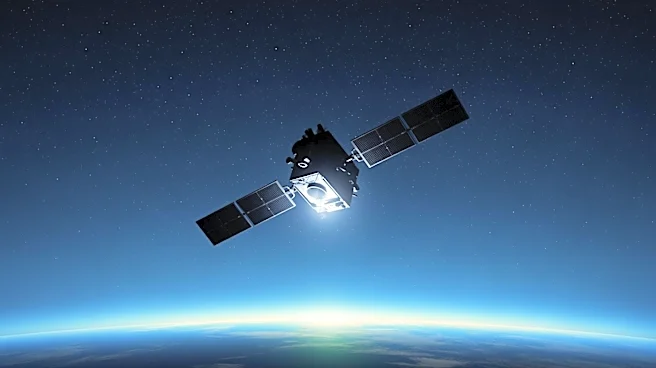
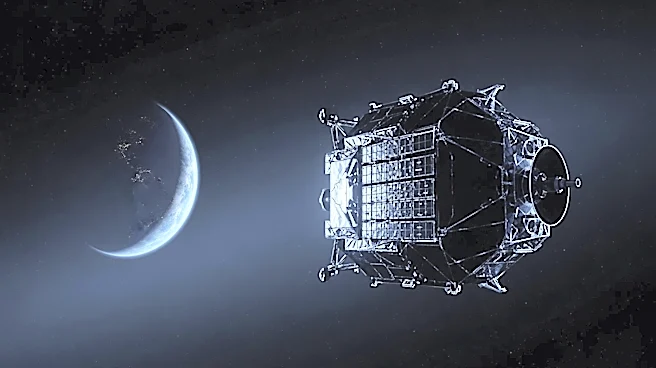
NASA's Artemis II mission has successfully demonstrated the use of laser-based optical communication to transmit high-definition data between the Moon and Earth. This technology, which offers significantly higher data rates than traditional radio systems,
was showcased during the mission's 10-day journey around the Moon. The optical communication system, attached to the Orion spacecraft, utilized infrared lasers to send data to ground stations on Earth. These stations, including a newly developed facility in Australia, played a crucial role in capturing and relaying the data. The mission marked a significant advancement in space communication technology, enabling the transmission of large volumes of information at high speeds.
Why It's Important?
The successful demonstration of laser communication technology during the Artemis II mission represents a transformative leap in space communication capabilities. By enabling high-speed data transfer, this technology enhances the efficiency and effectiveness of space missions, allowing for more detailed scientific observations and real-time data sharing. The ability to transmit large volumes of data quickly is crucial for future lunar and deep-space missions, supporting complex operations and enhancing scientific discovery. This advancement positions NASA to better support its Artemis program goals and paves the way for more ambitious missions to the Moon, Mars, and beyond.
What's Next?
As NASA continues to develop its Artemis program, the integration of laser communication technology will play a vital role in supporting future lunar operations. The success of the Artemis II mission sets the stage for further advancements in space communication, with potential applications in crewed missions to Mars and other deep-space destinations. NASA's continued investment in this technology will likely lead to improvements in data transmission capabilities, enhancing mission planning and execution. The collaboration with international partners, such as the Australian National University, highlights the importance of global cooperation in advancing space exploration technologies.