
What's Happening?
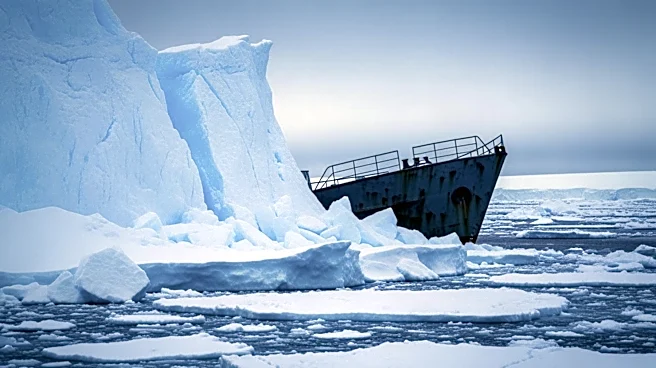
As global warming continues to impact the Antarctic continent, the melting ice is predicted to expose significant mineral resources, including gold, silver, copper, iron, and platinum. A study published in Nature Climate Change highlights that the retreat
of the ice sheet will reveal a diverse landscape of mountains, valleys, and volcanoes, potentially leading to geopolitical shifts as countries vie for these resources. The research, led by a geophysicist from the University of California, Santa Cruz, outlines scenarios for ice melting and land exposure by 2300, with the most severe scenario predicting an exposed area comparable to the size of Hokkaido and Kyushu combined. The study also notes that areas claimed by Argentina, Chile, and the United Kingdom are likely to see significant land exposure, where known mineral deposits exist.
Why It's Important?
The potential exposure of mineral resources in Antarctica due to ice melting could lead to significant geopolitical changes. Currently, the Antarctic Treaty prohibits commercial mining, allowing only scientific exploration. However, as the possibility of resource extraction becomes more feasible, countries with territorial claims may push for renegotiation of the treaty terms. This could lead to increased international tension and competition over resource-rich areas. The economic implications are substantial, as access to these minerals could benefit industries reliant on these resources, potentially altering global supply chains and market dynamics.
What's Next?
The Antarctic Treaty Environmental Protection Protocol, which currently prohibits resource development, is up for review in 2048. This review could become a focal point for discussions on the future of mineral extraction in Antarctica. Countries with territorial claims may seek to renegotiate the treaty to allow for commercial mining, depending on the feasibility of extraction and the geopolitical climate at that time. The international community will need to balance environmental protection with economic interests, potentially leading to new legal frameworks governing Antarctic resources.
Beyond the Headlines
The melting of Antarctic ice and the exposure of mineral resources raise ethical and environmental concerns. The harsh conditions of Antarctica make mineral extraction challenging and potentially harmful to the fragile ecosystem. Additionally, the legal and diplomatic complexities of territorial claims could lead to disputes and require careful negotiation to avoid conflict. The situation underscores the broader impacts of climate change, highlighting the need for sustainable and cooperative approaches to resource management in vulnerable regions.