
What's Happening?
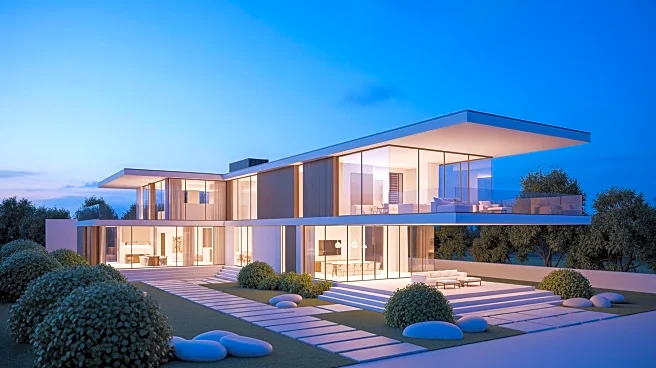
A renowned Midcentury modern home designed by the late architect Ray Kappe has been listed for sale at $11.5 million in Pacific Palisades, California. The property, which served as Kappe's primary residence,
is being sold by his family trust following his death in 2019 and his wife Shelly's passing last year. The house, built in 1967, is a striking example of modernist architecture, featuring a 4,157-square-foot floor plan spread across seven levels. It includes five bedrooms, five bathrooms, and expansive living spaces wrapped in redwood and glass. The home is noted for its unique design elements, such as cantilevered decks and platforms overlooking a lap pool, spa, sauna, and cabana, all surrounded by lush vegetation. Despite its architectural significance, the house could not be built today due to current building codes, which require handrails on stairs and limit the amount of glass used in construction.
Why It's Important?
The listing of Ray Kappe's home highlights the enduring appeal and value of architecturally significant properties. As a piece of architectural history, the house represents a rare opportunity for buyers interested in owning a landmark of modernist design. The sale underscores the challenges of preserving such properties, which often do not conform to contemporary building codes. This situation reflects broader issues in real estate and urban planning, where historical preservation must be balanced with modern safety standards. The interest in this property also indicates a strong market for unique and culturally significant homes, which can command premium prices despite their non-compliance with current regulations.
What's Next?
The sale of the Kappe residence is likely to attract significant interest from collectors and enthusiasts of modernist architecture. Potential buyers will need to consider the implications of owning a historic property that does not meet current building codes, which may require special maintenance or renovations. The outcome of this sale could influence the market for similar properties, potentially increasing the value of other architecturally significant homes. Additionally, the sale may prompt discussions about how to best preserve and adapt historic homes to meet modern standards while maintaining their original design integrity.