





What's Happening?
The Solid Rock Community Development Corporation is actively seeking volunteers to assist with its aquaponic farming operation, known as the Aquapod, located at the Family Success Center in southeast Colorado Springs. The Aquapod, operational for approximately
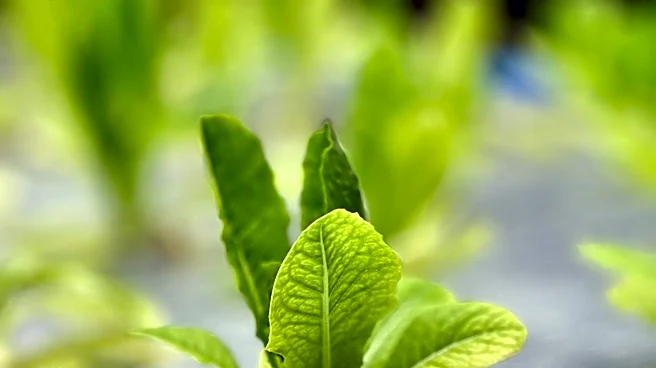
one year, produces hundreds of heads of lettuce, which are then donated to local organizations such as Food to Power and the Sunny Side Market. Recently, the farm also supplied produce to schools within Harrison School District 2. Dan Zimmerman, who manages the Aquapod, highlighted the partnership with Harrison School District 2, where the district purchases some of the lettuce for its schools. The aquaponic system grows plants in water without soil, similar to hydroponics, but utilizes live fish to fertilize the vegetables. Fish waste, rich in ammonia, is processed through a bio-filter to separate solid waste, and the ammonia is then used as fertilizer. The entire process, from seeding to harvest, takes about eight weeks in the summer and ten weeks in the winter due to varying sunlight levels. The organization is specifically looking for volunteers for two 2-hour shifts on Saturdays, from 8 to 10 a.m. or 10 a.m. to noon, to help with seeding, harvesting, and post-harvest production.
Why It's Important?
This initiative is important for several reasons, primarily addressing food access, nutrition, and community engagement in Colorado Springs. By providing fresh, locally grown produce, the Aquapod helps combat food insecurity and offers a healthier alternative to store-bought options, which often have a longer farm-to-table journey, reducing their nutritional value. The partnership with Harrison School District 2 is particularly significant, as it introduces fresh, nutrient-dense food into school meal programs, potentially expanding children's diets and promoting healthier eating habits from a young age. The aquaponic system itself represents an innovative and sustainable farming method, using approximately 90% less water than traditional soil farming and eliminating the need for weeding. This efficiency can serve as a model for sustainable agriculture in urban environments. Furthermore, the call for volunteers fosters community involvement and provides opportunities for residents to learn about sustainable food production, contributing to a more informed and engaged citizenry regarding local food systems. The project also supports local economic development by creating a localized food supply chain.
What's Next?
The immediate next step for the Solid Rock Community Development Corporation is to recruit the necessary volunteers to sustain and potentially expand the Aquapod's operations. Ideally, they aim to secure ten volunteers for each of the two-hour Saturday shifts. Successful recruitment will enable the farm to continue its current level of production and potentially increase its output, allowing for more donations to local food pantries and a greater supply for Harrison School District 2. Dan Zimmerman expressed a desire to get more fresh, locally grown produce into schools, indicating a potential for expanding partnerships with other educational institutions. The organization will likely continue to promote the benefits of local farming and aquaponics to attract more community support and volunteers. Future plans could also involve exploring additional distribution channels for their produce or expanding the Aquapod's capacity if volunteer and funding resources allow. The long-term goal appears to be a sustained effort to enhance fresh food access, workforce training, and community education through innovative aquaponics.
Beyond the Headlines
Beyond the immediate benefits of fresh food provision, the Aquapod project highlights broader implications for urban sustainability and community resilience. The adoption of aquaponics, a closed-loop system, demonstrates a commitment to environmental stewardship by significantly reducing water usage compared to conventional farming. This approach could inspire other urban centers to explore similar sustainable agricultural practices, contributing to localized food security and reducing reliance on distant food supply chains, which are vulnerable to disruptions. The educational aspect, particularly for children in Harrison School District 2, extends beyond nutrition, offering practical lessons in biology, environmental science, and sustainable living. This hands-on exposure can cultivate a new generation of environmentally conscious citizens. Furthermore, the volunteer-driven model reinforces the importance of community self-sufficiency and collective action in addressing local challenges. It fosters a sense of ownership and shared responsibility for community well-being, potentially strengthening social bonds and civic engagement in Colorado Springs. The project also subtly challenges traditional notions of agriculture, showcasing how food production can be integrated into urban landscapes using advanced, eco-friendly technologies.