






What's Happening?
Children and relatives of Mexican drug cartel leaders have been attending elite schools in the United States, including public and private institutions, some with annual costs exceeding $100,000. While kinship alone does not automatically bar a student
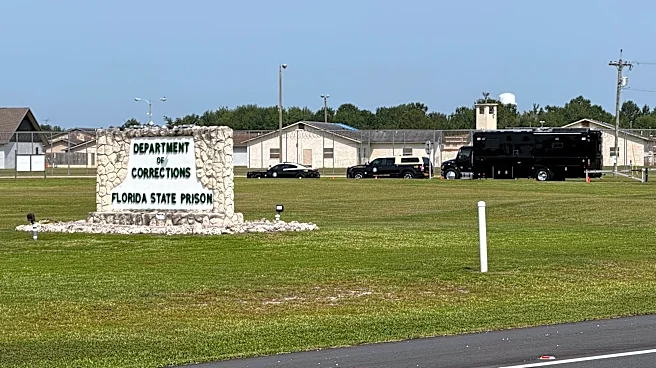
from enrollment, U.S. authorities are scrutinizing the financial sources for tuition and related expenses. The Office of Foreign Assets Control (OFAC) recently sanctioned IMG Academy in Florida for engaging in transactions with individuals on its sanctions list, specifically related to tuition payments for two student-athletes whose financial sponsors were sanctioned. The investigation found that the school failed to conduct sufficient checks to detect the sanctioned status of these individuals. This highlights a complex legal landscape where the student's relationship to a cartel figure is not the primary issue, but rather the origin of the funds used for their education and whether those funds come from sanctioned individuals or illicit activities. Cases involving individuals like Serafín and Teresa Zambada Ortiz, children of Ismael “El Mayo” Zambada, and the child of Wendy Dalaithy Amaral Arévalo, linked to Los Cuinis, illustrate this trend. Amaral Arévalo herself pleaded guilty to violating anti-narcotics sanctions by managing over $500,000 in tuition payments despite being prohibited from using the U.S. financial system.
Why It's Important?
This situation carries significant implications for U.S. educational institutions and financial compliance. The cases reveal a vulnerability in the U.S. financial system where illicit funds from drug trafficking organizations can be channeled into legitimate sectors, such as education. For schools, the risk lies in inadvertently facilitating money laundering or violating sanctions, leading to substantial penalties, as seen with IMG Academy's $1.72 million settlement. This also raises questions about the due diligence processes of educational institutions, particularly those with high tuition fees and international student recruitment. From a broader perspective, the enrollment of cartel leaders' children in U.S. schools can be seen as a form of 'reputation laundering,' where association with prestigious institutions helps project an image of legitimacy for families with questionable wealth. This practice can undermine efforts to combat organized crime by allowing cartel-linked individuals to gain social networks and institutional recognition in the U.S., potentially enabling future illicit activities or providing a pathway for their families to integrate into legitimate society.
What's Next?
U.S. authorities are expected to continue their focus on the financial aspects of these cases, scrutinizing the origin of funds used for tuition and other expenses. Educational institutions, especially those with international students and high costs, will likely face increased pressure to implement more robust compliance programs and due diligence checks to identify and prevent transactions with sanctioned individuals or those linked to illicit activities. This could involve enhanced screening of parents, guardians, and third-party sponsors, as well as stricter monitoring of financial transfers. The Department of Justice and OFAC will likely pursue further investigations and enforcement actions against institutions found to be in violation of sanctions or anti-money laundering laws. Additionally, there may be ongoing discussions and potential legislative efforts to strengthen immigration laws to specifically address the inadmissibility of individuals who have financially benefited from drug trafficking, even if they are not directly involved in the illicit activities themselves. The sentencing of individuals like Wendy Dalaithy Amaral Arévalo, scheduled for December 2026, will also set precedents for how such violations are prosecuted.
Beyond the Headlines
Beyond the immediate legal and financial implications, this issue touches upon deeper ethical and societal dimensions. The presence of cartel-linked individuals in U.S. schools highlights the pervasive influence of organized crime across borders and its attempts to legitimize itself through education. It forces a re-evaluation of the responsibilities of educational institutions in a globalized world, where the origins of wealth can be opaque. The concept of 'reputation laundering' suggests a systemic challenge where the prestige of U.S. education can be exploited to sanitize illicit fortunes, potentially eroding public trust in these institutions. Furthermore, while the law generally does not punish children for the crimes of their parents, the financial benefits derived from illicit activities raise complex questions about accountability and the intergenerational transfer of wealth. This situation also underscores the ongoing struggle between U.S. law enforcement and drug cartels, demonstrating how cartels adapt their strategies, including using legitimate avenues, to protect their families and assets, thereby complicating efforts to dismantle their networks.