
What's Happening?
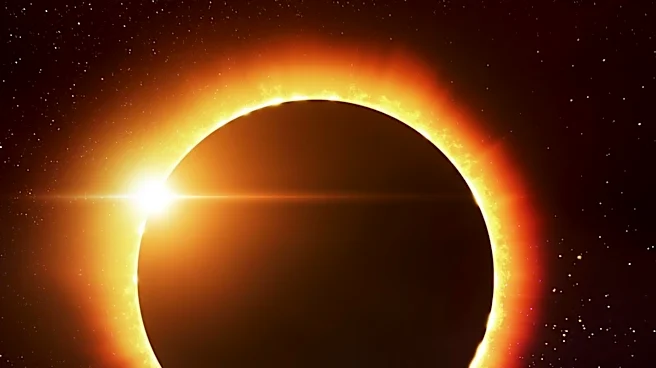
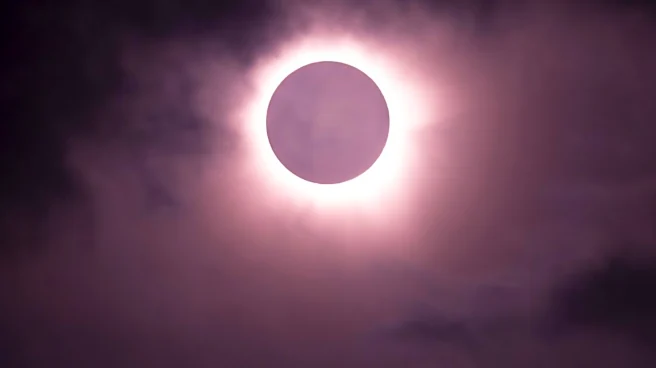
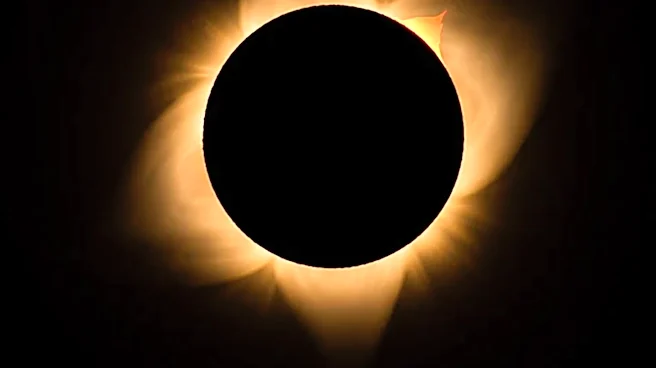
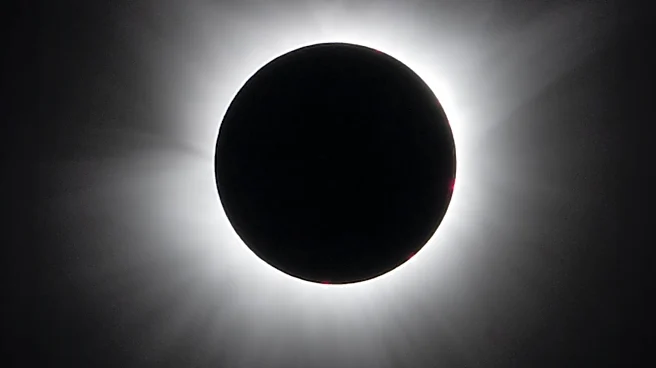
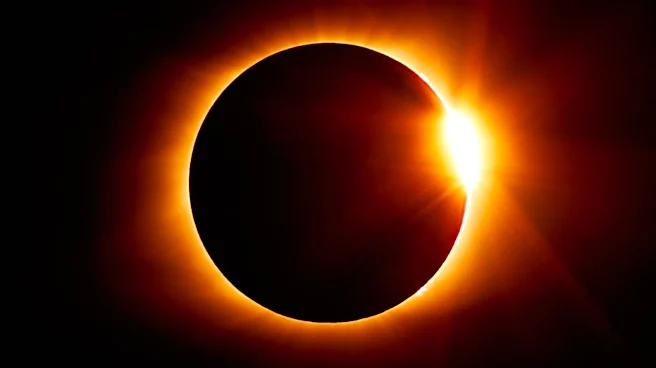
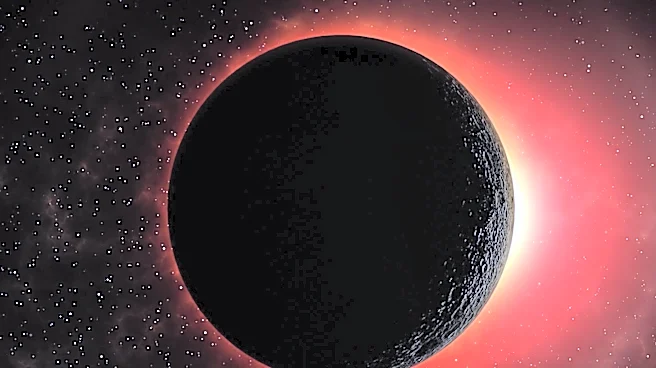
On August 12, 2026, a total solar eclipse will traverse parts of the Northern Hemisphere, providing millions with the chance to witness this celestial event. The path of totality, where the moon completely covers the sun, will begin over the Arctic Ocean
and move across eastern Greenland, western Iceland, and northern Spain, before concluding over the Mediterranean Sea. This path is relatively narrow, only 182 miles wide, allowing those within it to see the sun's corona with the naked eye. Northern Spain is anticipated to be a popular destination for eclipse enthusiasts due to its accessibility and the dramatic views expected as the eclipse occurs near sunset. Meanwhile, Greenland and Iceland will offer unique experiences with the eclipse occurring higher in the sky against their Arctic landscapes. A larger surrounding area, including much of Europe, will experience a partial solar eclipse.
Why It's Important?
The 2026 total solar eclipse presents significant opportunities for scientific observation and public engagement with astronomy. Such events allow scientists to study the sun's corona and other solar phenomena that are otherwise obscured by the sun's brightness. For the public, it offers a rare chance to experience a total solar eclipse, which can inspire interest in science and astronomy. Economically, regions within the path of totality, like northern Spain, may see a boost in tourism as eclipse chasers travel to witness the event. This influx can benefit local businesses and promote cultural exchange. Additionally, the eclipse serves as a reminder of the interconnectedness of global natural phenomena, as it will be visible across multiple countries, fostering international collaboration in scientific research and public outreach.
What's Next?
As the date of the eclipse approaches, preparations will likely intensify in regions within the path of totality. Local governments and tourism boards may develop strategies to accommodate the expected influx of visitors, including infrastructure improvements and public safety measures. Scientific organizations and educational institutions might organize events and workshops to maximize public engagement and educational opportunities. Additionally, media coverage and live streaming of the eclipse will be planned to reach a global audience, allowing those outside the path of totality to experience the event virtually. Researchers will also prepare to conduct studies during the eclipse, focusing on solar and atmospheric phenomena.