




What's Happening?
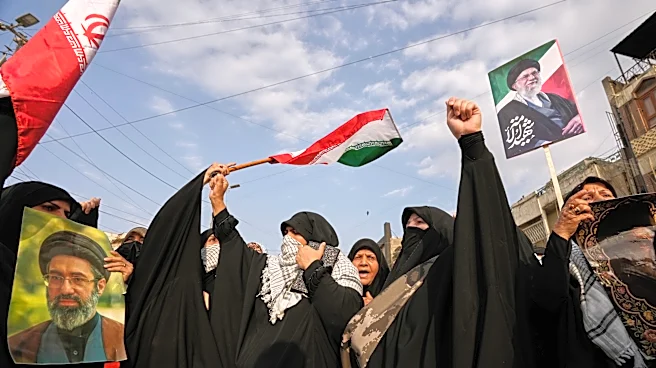
Iran's foreign minister, Abbas Araghchi, returned to Islamabad as Pakistan's leadership attempts to revive ceasefire talks between Iran and the United States. Araghchi's unexpected departure and return to Pakistan have added complexity to the ongoing
diplomatic efforts. The U.S. had previously extended a ceasefire with Iran, but a permanent resolution remains elusive. The situation is further complicated by the strategic importance of the Strait of Hormuz, where Iran seeks to impose tolls on passing vessels, a move that has not yet received Oman's support. The U.S. maintains a blockade of Iranian ports, and both nations continue to issue military threats. President Trump has indicated a willingness to negotiate, provided Iran does not pursue nuclear weapons.
Why It's Important?
The negotiations between Iran and the U.S. are critical due to their potential impact on global oil markets and regional stability. The Strait of Hormuz is a vital passage for global oil shipments, and any disruption could have significant economic repercussions. The ongoing conflict has already resulted in thousands of casualties and disrupted global supply chains. The diplomatic efforts, if successful, could lead to a de-escalation of military tensions and a stabilization of oil prices. However, the failure to reach a permanent agreement could exacerbate the conflict, leading to further economic and humanitarian consequences.
What's Next?
The next steps involve continued diplomatic efforts by Pakistan to mediate between Iran and the U.S. The potential for renewed talks depends on both parties' willingness to compromise, particularly regarding Iran's nuclear ambitions and the U.S. blockade. The international community will be closely monitoring the situation, as any escalation could have widespread implications. The U.S. has indicated that it will not send envoys until there is progress, while Iran seeks to end the blockade as a precondition for further negotiations.
Beyond the Headlines
The situation highlights the complex geopolitical dynamics in the Middle East, where regional powers like Iran and global powers like the U.S. vie for influence. The conflict underscores the challenges of achieving lasting peace in a region marked by historical tensions and competing interests. The role of intermediaries like Pakistan and Oman is crucial in facilitating dialogue and preventing further escalation. The outcome of these negotiations could set a precedent for future diplomatic engagements in the region.