
What's Happening?
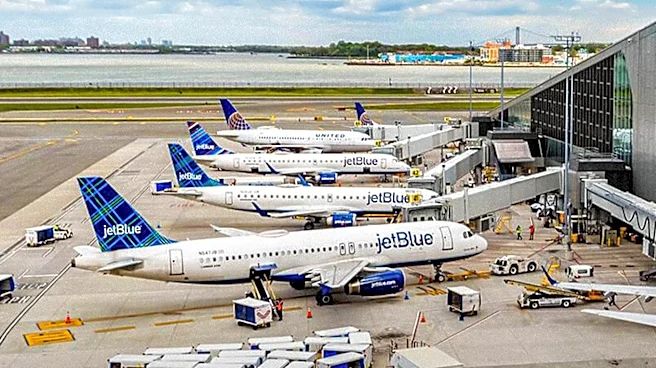
JetBlue passengers at Logan Airport in Boston faced significant disruptions as flight delays led to cancellations, forcing many to sleep on cots at the airport. The issues arose after a series of cancellations last
week, which the airline attributed to federal air traffic control staffing issues and isolated weather problems. Passengers like Nicole Spittell experienced multiple delays before their flights were ultimately canceled. The airline offered a $250 per night reimbursement for hotel stays, but only if passengers could pay upfront for the entire duration. The JetBlue pilot union has highlighted systemic issues within the airline, citing long delays in processing schedule changes. Staffing challenges, particularly at the end of the month, are not unique to JetBlue and affect the broader airline industry.
Why It's Important?
The disruptions at Logan Airport underscore ongoing challenges in the airline industry, particularly related to staffing and operational efficiency. These issues can significantly impact consumer trust and satisfaction, potentially affecting JetBlue's reputation and financial performance. The situation also highlights the broader systemic issues within the airline industry, where staffing shortages and operational inefficiencies can lead to widespread disruptions. For passengers, these challenges translate into inconvenience, financial burdens, and missed opportunities, such as family visits or business engagements. The airline's ability to address these issues effectively will be crucial in maintaining customer loyalty and competitive advantage.
What's Next?
JetBlue and other airlines may need to reassess their staffing and operational strategies to prevent similar disruptions in the future. This could involve better planning for crew availability and more efficient handling of schedule changes. Regulatory bodies might also scrutinize the airline's practices to ensure compliance with consumer protection standards. Passengers affected by cancellations may seek compensation or refunds, potentially leading to increased customer service demands. The airline industry as a whole may face pressure to improve transparency and communication with passengers during disruptions.