







What's Happening?
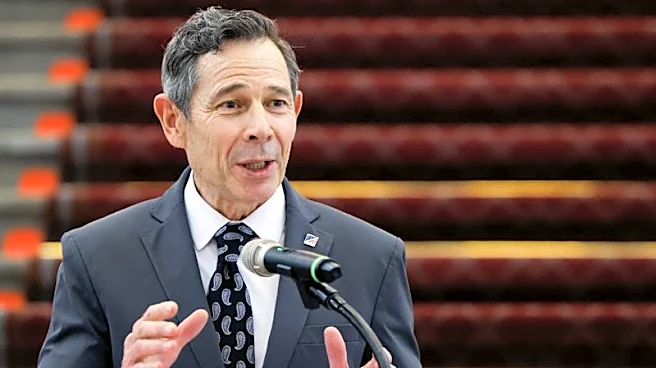
The American Nuclear Society (ANS) has submitted comments to the Office of Management and Budget's (OMB) Office of Federal Financial Management, urging reconsideration of a proposed regulation concerning federal financial assistance. According to John
Starkey, ANS's director of public policy, this increased activity stems from executive orders signed by President Trump in May 2025, which aimed to expand nuclear energy. ANS argues that the proposed rule could significantly hinder the effectiveness of federal research investments, U.S. competitiveness, independent scientific inquiry, and the long-term sustainability of technical associations like ANS. The Society emphasizes that sustained investment in education, research, and workforce development is crucial for meeting the nation's growing energy, national security, and technology needs, and continued federal support for nuclear R&D is vital for maintaining U.S. leadership.
Why It's Important?
This development is important because it highlights a potential conflict between federal regulatory efforts and the advancement of critical scientific and technological fields in the U.S., specifically nuclear energy. If the OMB's proposed regulation proceeds as written, it could jeopardize federal research funding, which is a cornerstone of innovation and competitiveness. The nuclear energy sector, vital for national security and energy independence, relies heavily on federal support for research and development. Hindering this support could lead to a decline in U.S. leadership in nuclear technology and a weakening of the workforce pipeline. Furthermore, the concerns raised by ANS suggest broader implications for how federal financial assistance regulations impact various scientific and technical organizations, potentially affecting their ability to conduct independent research and contribute to national objectives.
What's Next?
The OMB will likely review the comments submitted by the American Nuclear Society and other stakeholders as it considers the final form of the 'Regulation for Federal Financial Assistance.' The outcome of this review could lead to revisions in the proposed rule, potentially incorporating some of ANS's concerns to mitigate adverse effects on nuclear research and development. Stakeholders, including other scientific and technical organizations, will be closely watching the OMB's response, as it could set a precedent for how federal financial assistance is managed across various sectors. The ongoing dialogue between federal agencies and scientific bodies will be crucial in shaping policies that balance regulatory oversight with the need to foster innovation and maintain U.S. leadership in critical technologies.
Beyond the Headlines
Beyond the immediate regulatory implications, this situation underscores a broader tension between governmental oversight and the autonomy of scientific research. The proposed rule, while likely intended to ensure accountability and efficiency in federal spending, could inadvertently create bureaucratic hurdles that stifle innovation and collaboration. The emphasis by ANS on 'independent scientific inquiry' suggests concerns about potential governmental influence or restrictions on research agendas. This debate also touches upon the long-term strategic vision for U.S. technological leadership, particularly in areas like nuclear energy, which require substantial and consistent investment. The balance struck in this regulation could influence not only the future of nuclear research but also the overall health and independence of the U.S. scientific community.