








What's Happening?
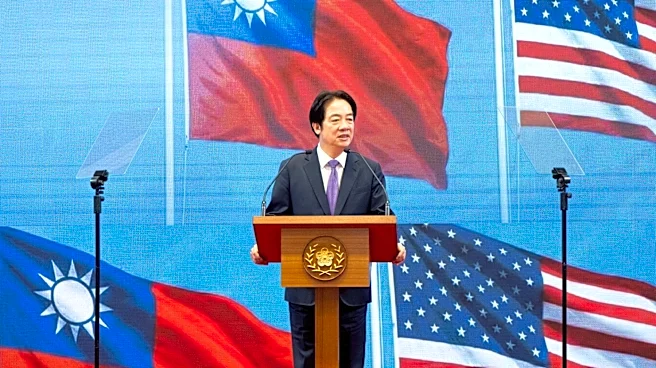
Taiwan's President Lai Ching-te has defended the island's arms purchases from the United States, describing them as crucial for regional peace and stability. This statement comes after President Donald Trump referred to a proposed $14 billion arms package
to Taiwan as a 'bargaining chip' with China. Trump's comments have raised concerns in Taiwan, although U.S. officials have reassured that there is no change in the official U.S. policy towards Taiwan. The U.S. remains Taiwan's largest arms supplier, a relationship that is critical given China's claims over the island.
Why It's Important?
The arms sales are a significant aspect of U.S.-Taiwan relations, serving as a deterrent against potential aggression from China. President Trump's remarks have introduced uncertainty into this relationship, which could have broader implications for regional security. The U.S. is legally bound to provide Taiwan with defensive capabilities, and any perceived wavering in this commitment could embolden China, potentially destabilizing the region. The situation highlights the complex dynamics of U.S.-China-Taiwan relations and the strategic importance of maintaining a balance of power in the Asia-Pacific.
What's Next?
The decision on the arms package is pending, with President Trump expected to weigh various factors before proceeding. The outcome will be closely watched by international observers, as it could influence the geopolitical landscape in the region. Taiwan's government continues to seek reassurances from the U.S. regarding its security commitments, while China remains vigilant about any developments that could affect its claims over Taiwan.