


What's Happening?
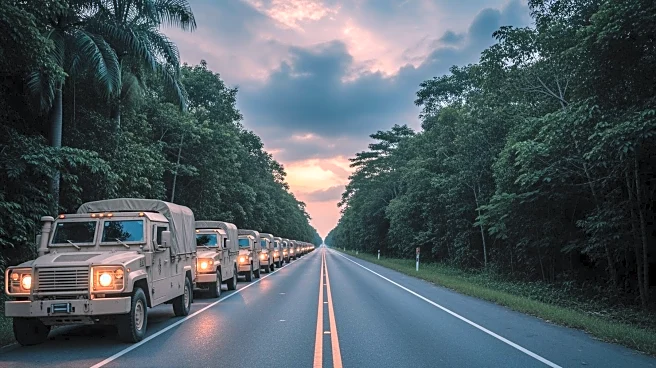
Brazil has announced the deployment of National Public Security Force (FNSP) troops to its northern Roraima state, which borders Venezuela. This decision follows recent US airstrikes in Venezuela and the abduction of Venezuelan President Nicolas Maduro.
The Brazilian government issued a decree authorizing the deployment to Pacaraima and Boa Vista, aiming to support local security agencies in maintaining public order. The region is known for illegal armed groups involved in drug trafficking and illegal mining. The move comes amid heightened tensions, with Venezuela reportedly increasing its military presence at the border. Brazilian President Luiz Inacio Lula da Silva has criticized the US actions, describing them as crossing an 'unacceptable line.' Despite the tensions, experts suggest that Brazil is unlikely to become a primary focus of the Trump administration's foreign policy concerns.
Why It's Important?
The deployment of Brazilian troops to the Venezuela border underscores the escalating regional tensions following US military actions. This move highlights Brazil's strategic response to potential security threats posed by illegal armed groups and the possibility of increased migration from Venezuela. The situation also reflects broader geopolitical dynamics, as Brazil positions itself in response to US actions in Latin America. The criticism from President Lula indicates a potential shift in Brazil's diplomatic stance, which could influence its relations with the US and other regional powers. The deployment aims to stabilize the border region, but it also raises questions about the long-term implications for Brazil's foreign policy and regional security strategy.
What's Next?
Brazil's deployment of troops is likely to be closely monitored by international observers, as it could influence regional security dynamics. The situation may prompt further diplomatic engagements between Brazil and the US, as well as with other Latin American countries. The presence of illegal armed groups at the border remains a significant concern, and Brazil may need to enhance its security measures to prevent cross-border criminal activities. Additionally, the international community will be watching for any potential humanitarian impacts, such as increased migration flows, which could require coordinated regional responses.