







What's Happening?
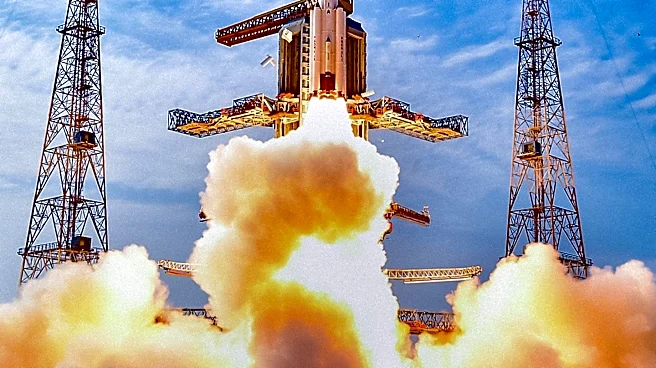
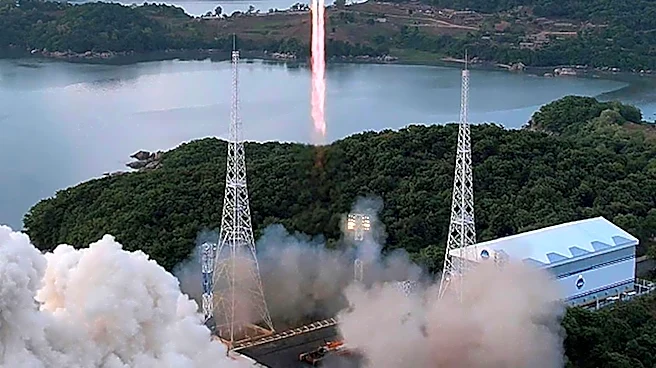
China experienced a rare failure with its Long March 7A rocket, which exploded shortly after launch from the Wenchang Space Launch Site on Hainan Island. The rocket, carrying the ChinaSat-4B communications satellite, erupted into a fireball less than
90 seconds into its flight, resulting in the loss of both the rocket and satellite over the South China Sea. The failure was confirmed by state news agency Xinhua, which reported an 'anomaly during flight' as the cause. The incident marks a setback for China's space program, which has seen a series of successful launches with the Long March series.
Why It's Important?
The failure of the Long March 7A rocket represents a significant setback for China's space ambitions, particularly as the country seeks to expand its capabilities in satellite communications and space exploration. The loss of the ChinaSat-4B satellite impacts China's ability to provide communication services and may delay future satellite deployments. This incident could also affect international perceptions of China's reliability in space technology, potentially influencing partnerships and collaborations in the global space industry.
What's Next?
An investigation into the cause of the rocket's failure is underway, which will determine the timeline for resuming launches with the Long March 7A. The grounding of this rocket could delay other planned missions, including those involving international collaborations. The outcome of the investigation will be crucial in addressing any technical issues and restoring confidence in China's space launch capabilities.