



What's Happening?
On August 18, 2026, the American Broadcasting Company (ABC), its owner The Walt Disney Company, and several affiliate television stations filed a 45-page lawsuit in the U.S. District Court for the District of Columbia against the Federal Communications
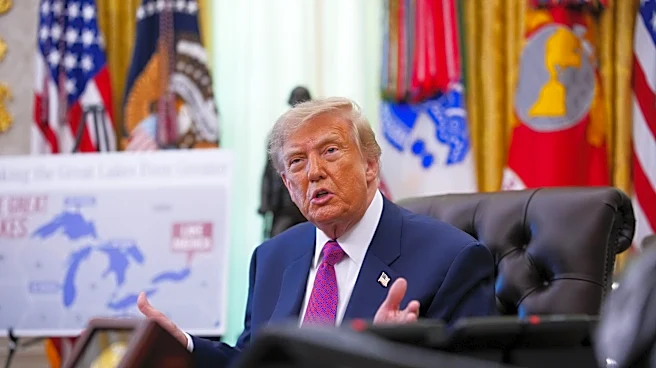
Commission (FCC), its chair Brendan Carr, and other FCC commissioners. The lawsuit seeks declaratory and injunctive relief, alleging that the FCC's actions constitute unconstitutional attempts to suppress their First Amendment rights of freedom of the press. The suit claims the FCC is retaliating against ABC's news coverage by demanding early license renewal applications and unrelated information regarding their diversity, equity, and inclusion policies. This action follows numerous comments from President Trump and Chairman Carr criticizing the media and threatening to withdraw licenses. Specifically, the lawsuit cites FCC Chairman Carr's remarks after comedian Jimmy Kimmel made comments on air, where Carr stated, 'We can do this the easy way or the hard way. These companies can find ways . . . to take action . . . on Kimmel, or there is going to be additional work for the FCC ahead.' President Trump had also frequently referred to ABC as 'fake news' and objected when it did not broadcast his speech live on his allegations of election fraud. The suit also highlights criticism of 'The View' for its negative coverage of administrative policies and for hosting political candidates opposed to President Trump, despite similar programs being exempt from equal time rules.
Why It's Important?
This lawsuit is critically important as it directly challenges the boundaries of governmental power over media organizations and the protection of First Amendment rights in the United States. If the FCC's actions are deemed retaliatory, it could set a dangerous precedent, allowing future administrations to use regulatory bodies to silence critical press. This case underscores the ongoing tension between political administrations and media outlets, particularly concerning coverage perceived as unfavorable. The outcome could significantly impact journalistic independence and the ability of news organizations to report freely without fear of government reprisal. For the broadcasting industry, an adverse ruling against ABC could lead to a chilling effect, where stations might self-censor to avoid regulatory scrutiny, thereby limiting the diversity of information available to the public. Conversely, a ruling in favor of ABC would reinforce the constitutional protections for a free press, potentially empowering media organizations to maintain their editorial independence. The involvement of high-profile figures like Jimmy Kimmel and President Trump further amplifies the public and political stakes of this legal battle.
What's Next?
The lawsuit requests a speedy hearing, a temporary restraining order, and a preliminary injunction against the license renewal proceedings. The case has been assigned to Judge Loren AliKhan. A hearing on ABC's request for emergency relief is scheduled for the fall. The outcome of this hearing will be a crucial indicator of the lawsuit's potential trajectory and the immediate future of ABC's license renewals. Depending on the court's decision, the FCC may be compelled to halt its demands for early license renewals and information, or the legal battle could proceed to a more prolonged trial. Major stakeholders, including other media organizations and press freedom groups, will be closely watching the proceedings, as the ruling could influence how regulatory bodies interact with the press across the nation. President Trump has also continued to make statements regarding media licenses, indicating that the political pressure on news outlets may persist regardless of the lawsuit's immediate outcome.
Beyond the Headlines
This case delves into the deeper implications of government censorship and the erosion of press freedom, echoing concerns about the weaponization of federal agencies for political ends. The lawsuit explicitly states that if the administration succeeds, the message to every media company will be to 'tell only the stories the Administration deems favorable, or face the coercive machinery of the federal government.' This highlights a fundamental challenge to democratic principles, where a free and independent press is considered a cornerstone. The legal arguments invoke Supreme Court precedents, such as *National Rifle Association v. Vullo* (1924) and *Morse v. Frederick* (2007), emphasizing that government cannot punish or suppress disfavored expression and that political speech is at the core of the First Amendment. The case also touches upon the historical context of FCC procedures, noting that it has been half a century since the FCC ordered a television station to justify license renewal ahead of schedule. This suggests a potential shift in regulatory practices that could have long-term consequences for media accountability and public discourse.