


What's Happening?
Missouri Republicans are initiating last-minute campaigns for two ballot measures, Proposition A and Amendment 6, after spending much of the year attempting to prevent them from appearing on the November 3 election ballot. The party's State Committee
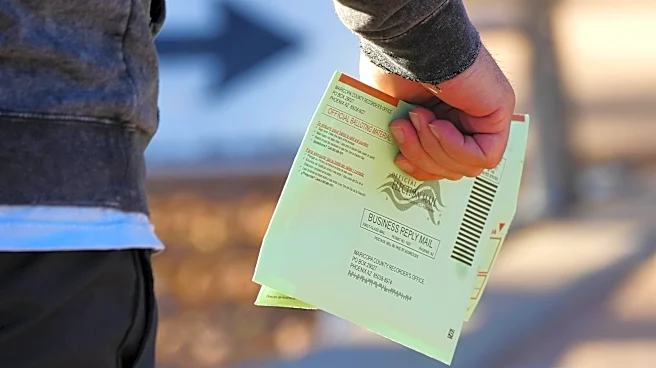
recently passed resolutions advocating for a 'yes' vote on Proposition A, which is a referendum on the 2025 redistricting map, and a 'no' vote on Amendment 6, designed to restrict lawmakers' ability to alter measures enacted by initiative petition. This scramble follows a U.S. Supreme Court decision that mandated the use of 2022 and 2024 election districts for the upcoming November elections, effectively overturning the 2025 redistricting map that Republicans had favored. Absentee voting has already begun, and no-excuse early voting is set to start in three weeks, leaving the party with a tight timeframe to mobilize support for their positions on these measures.
Why It's Important?
This development highlights the significant impact of judicial decisions on electoral processes and political strategy, particularly concerning redistricting and legislative power. The Supreme Court's ruling on the redistricting map has forced Missouri Republicans to pivot their campaign efforts, underscoring the fluidity and unpredictability of election cycles. The party's late entry into campaigning for these ballot measures, especially with early voting already underway, could affect voter awareness and turnout. Amendment 6, in particular, carries substantial implications for direct democracy in Missouri, as it seeks to protect citizen-initiated measures from legislative changes without a new statewide vote. The outcome of these campaigns will not only determine the state's electoral map but also the balance of power between the legislature and the electorate in future policy-making, potentially influencing the ability of either party to achieve supermajorities.
What's Next?
Missouri Republicans plan to develop and launch campaigns for Proposition A and Amendment 6 in the coming weeks, focusing on voter registration and turnout. Given the short timeframe before Election Day on November 3 and the ongoing early voting, these campaigns will need to be highly efficient in reaching voters. The party's efforts will likely involve significant spending on advertising and grassroots mobilization to counter existing campaigns, such as the 'Yes on Amendment 6' committee, which has already raised substantial funds. The outcome of these ballot measures will directly influence the state's political landscape, including the composition of the state legislature and the future of initiative petitions. The struggle over these measures is also expected to impact voter turnout, particularly in the absence of a high-profile statewide race, making the ballot initiatives central to voter engagement.
Beyond the Headlines
The intense focus on ballot measures in Missouri, particularly those related to redistricting and initiative petitions, reflects a broader national trend of political parties using direct democracy to shape policy and electoral outcomes. The Republican party's initial attempts to block these measures from the ballot, followed by their scramble to campaign for them, illustrates the strategic importance of controlling the terms of public debate and the mechanisms of governance. The debate over Amendment 6, which aims to safeguard citizen-initiated laws from legislative alteration, touches upon fundamental questions of popular sovereignty versus representative governance. The outcome could either empower citizens to enact policies directly or reinforce the legislature's authority, potentially altering the long-term balance of power in Missouri's political system and setting precedents for other states grappling with similar issues.