
What's Happening?
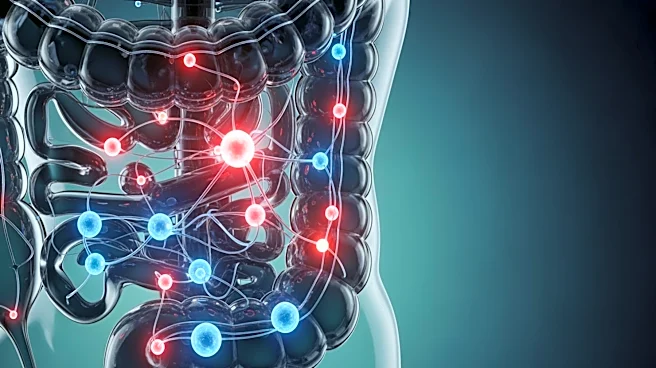
Researchers at Harvard Medical School have discovered a biological mechanism linking the gut bacterium Morganella morganii to major depressive disorder. The study, published in the Journal of the American
Chemical Society, reveals that an environmental contaminant, diethanolamine (DEA), can alter a molecule produced by M. morganii, triggering an immune response that releases inflammatory proteins like interleukin-6 (IL-6). This inflammation is associated with depression, providing a potential explanation for the bacterium's impact on mental health. The findings suggest that DEA could serve as a biomarker for diagnosing certain depression cases and highlight the role of the immune system in depression.
Why It's Important?
This research underscores the significant influence of the gut microbiome on mental health, particularly depression. By identifying a specific bacterium and its interaction with environmental contaminants, the study opens new avenues for diagnosing and treating depression. The potential use of DEA as a biomarker could lead to more targeted therapies, especially for patients whose depression is linked to immune responses. This discovery also emphasizes the broader implications of environmental pollutants on health, suggesting that reducing exposure to such contaminants could mitigate their impact on mental health.
What's Next?
Further research is needed to confirm whether the altered molecule directly causes depression and to explore how many depression cases might be influenced by this process. The study's insights could lead to the development of new treatments targeting immune responses, offering hope for patients with depression linked to inflammation. Additionally, the findings may prompt further investigation into how other gut bacteria and environmental factors contribute to mental health disorders.