



What's Happening?
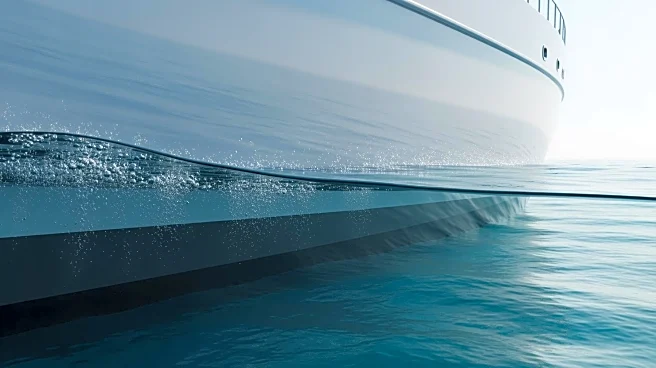
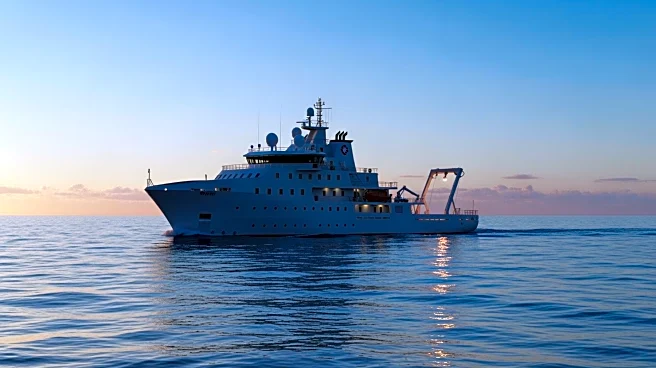
The Monterey Bay Aquarium Research Institute (MBARI) has launched the R/V David Packard, a state-of-the-art research vessel designed to replace the R/V Western Flyer. Built by Freire Shipyard, the vessel features a monohull design and is equipped with
advanced capabilities for scientific research, including launching and recovering remotely operated vehicles (ROVs) and autonomous underwater vehicles (AUVs). The vessel can conduct mooring deployments and collect conductivity, temperature, and depth (CTD) measurements. It is diesel-electric powered, with a range of 4,000 nautical miles and the capacity to stay at sea for up to three weeks.
Why It's Important?
The R/V David Packard represents a significant advancement in oceanographic research capabilities. Its cutting-edge design and equipment enable MBARI to conduct more comprehensive and efficient studies of marine environments, contributing to a deeper understanding of oceanic processes and ecosystems. This vessel enhances the institute's ability to address critical issues such as climate change, marine biodiversity, and ocean health. The collaboration between MBARI, Glosten, and Freire Shipyard demonstrates the importance of partnerships in advancing scientific research and innovation.
What's Next?
With the R/V David Packard now operational, MBARI is poised to undertake a series of research missions that will leverage the vessel's capabilities. These missions could yield valuable data and insights that inform conservation efforts and policy decisions related to marine environments. The vessel's success may also inspire further innovations in research vessel design, encouraging other institutions to invest in similar technologies. As MBARI continues its work, the findings from these missions could have far-reaching implications for ocean science and environmental policy.
Beyond the Headlines
The launch of the R/V David Packard underscores the growing importance of technological innovation in scientific research. As environmental challenges become more complex, the need for advanced tools and methods to study and protect marine ecosystems is increasingly critical. This vessel's capabilities highlight the potential for technology to enhance our understanding of the natural world and drive positive change. Additionally, the project reflects broader trends in sustainable design and international collaboration, setting a benchmark for future research initiatives.