
What's Happening?
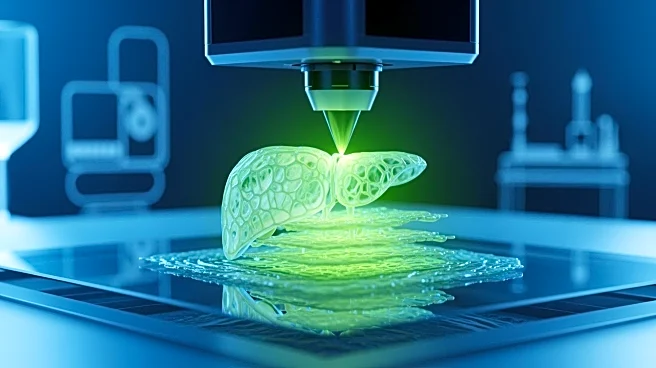
The University of California San Diego has launched a groundbreaking project funded by the Advanced Research Projects Agency for Health (ARPA-H) to develop 3D bioprinted, patient-specific human livers.
This initiative, part of ARPA-H's Personalized Regenerative Immunocompetent Nanotechnology Tissue (PRINT) program, is set to receive up to $25,771,771 over a 60-month period. The project aims to create 'made-to-order' livers using a patient's own cells, potentially offering a scalable and safe alternative to traditional organ transplants. This approach could eliminate the need for donor organs and lifelong immunosuppressant drugs. The team, led by Shaochen Chen, PhD, at UC San Diego, has developed a technology capable of rapidly fabricating high-resolution biological tissues. The project also involves collaboration with Allele Biotechnology, which specializes in personalized stem cell generation technologies.
Why It's Important?
This project addresses the critical shortage of donor organs, which affects thousands of patients in the United States annually. By potentially providing an on-demand source of functional liver tissue, the initiative could save the lives of over 12,000 patients currently on the transplant waiting list. The development of 3D bioprinted livers could significantly reduce healthcare costs and improve long-term outcomes for patients with chronic liver disease. The integration of artificial intelligence into the bioprinting process enhances the precision and scalability of creating complex, multi-cellular structures, which is crucial for the success of this technology. This advancement represents a significant step towards solving the organ shortage crisis and improving the quality of life for patients in need of transplants.
What's Next?
The research team plans to advance the bioprinting process from laboratory-grade to clinical-grade production, with the help of Allele Biotechnology's expertise in cell manufacturing. The collaboration aims to meet regulatory standards and move towards commercializing the bioprinting platform. The project's success could lead to the widespread adoption of 3D bioprinted organs, transforming the field of transplantation and regenerative medicine. As the technology progresses, it may also open avenues for bioprinting other types of organs, further alleviating the organ shortage crisis.