






What's Happening?
Ukraine has intensified its use of drone warfare to disrupt Russian supply lines, particularly targeting the 'land bridge' to Crimea. This strategic move has resulted in significant logistical challenges for Russia, with 125 trucks reportedly destroyed
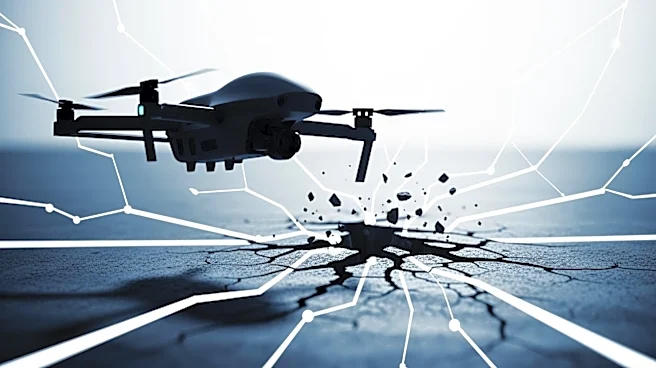
in May alone. The Ukrainian military's use of advanced drones, such as the AI-assisted Hornet, has not only targeted vehicles but also mined highways from the air, creating a 'deathtrap' for essential deliveries. This has led to severe shortages of gasoline and other goods in Crimea, impacting both the local population and Russian military operations. Concurrently, Russia faces manpower shortages, struggling to recruit enough soldiers despite offering significant financial incentives. The conflict has also seen increased Russian air raids on Ukrainian cities, with recent attacks involving 73 ballistic missiles and 656 drones, resulting in civilian casualties.
Why It's Important?
The escalation in drone warfare by Ukraine marks a significant shift in the conflict dynamics, potentially altering the balance of power. By targeting critical supply routes, Ukraine aims to weaken Russian military capabilities and morale. This strategy could lead to a partial blockade of Crimea, affecting both military and civilian logistics. The ongoing conflict has broader implications for international relations, particularly concerning U.S. involvement. Ukraine's reliance on U.S. missile supplies highlights the geopolitical stakes, as the U.S. faces its own challenges in maintaining stock levels due to other global conflicts. The situation underscores the importance of international military support for Ukraine and the potential consequences of its absence.
What's Next?
The continuation of drone warfare and the resulting logistical challenges for Russia may lead to increased pressure on the Kremlin to adapt its military strategies. Ukraine's appeal for additional missile supplies from the U.S. and Europe will be crucial in sustaining its defense capabilities. The potential for further escalation in air raids by Russia could exacerbate humanitarian issues in Ukrainian cities. Additionally, the international community's response, particularly from the U.S. and European allies, will be pivotal in shaping the conflict's trajectory. The possibility of renewed diplomatic efforts or increased military support remains uncertain, depending on the evolving geopolitical landscape.
Beyond the Headlines
The conflict's progression highlights the evolving nature of modern warfare, with drone technology playing a critical role. This shift raises ethical and legal questions about the use of autonomous weapons and their impact on civilian populations. The situation also reflects broader geopolitical tensions, with the U.S. and its allies navigating complex diplomatic and military challenges. The conflict's outcome could influence future international military strategies and alliances, particularly in regions with similar geopolitical tensions.