



What's Happening?
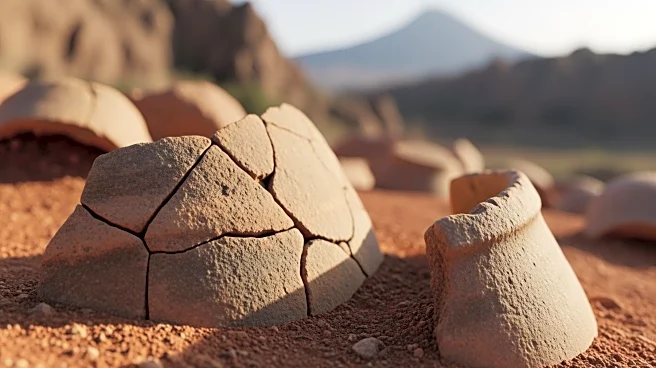
Recent archaeological findings near Mount Ararat in Turkey have sparked renewed debate over the historical location of Noah's Ark. Pottery fragments discovered in the area have been dated to align with traditional estimates of the era associated with Noah,
according to Professor Faruk Kaya. These findings have reignited interest and discussion among archaeologists and historians about the potential historical basis for the biblical story of Noah's Ark. The use of ground-penetrating radar (GPR) scans has provided additional insights into the geological formations in the region, further fueling speculation and scholarly debate.
Why It's Important?
The discovery of pottery fragments near Mount Ararat is significant as it adds a new dimension to the ongoing debate about the historical and archaeological evidence for Noah's Ark. This finding could potentially influence future archaeological research and exploration in the region, as well as contribute to broader discussions about the intersection of history, religion, and science. The renewed interest in the site may lead to increased tourism and academic study, impacting local economies and cultural heritage preservation efforts. Additionally, the debate highlights the challenges and complexities of interpreting ancient texts and artifacts in the context of modern scientific methods.