






What's Happening?
As spring arrives in Kansas, turkey vultures begin their northward migration, with some remaining in the state while others continue further north. Drew Ricketts, a wildlife specialist with K-State Extension, highlights the ecological benefits these scavengers
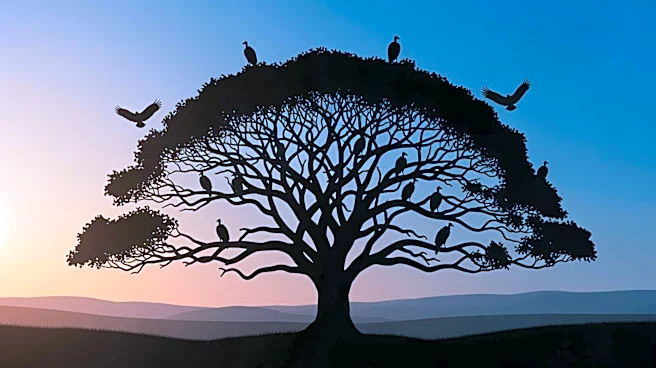
provide, particularly in livestock systems. Turkey vultures play a crucial role in removing animal carcasses, contributing an estimated $760 million annually in ecological services. However, their presence can also pose challenges, especially when large groups form roosts on structures like trees and towers, leading to significant feces accumulation and potential property damage.
Why It's Important?
The return of turkey vultures to Kansas underscores the balance between ecological benefits and management challenges. While they provide essential services by cleaning up carcasses, their roosting habits can lead to property damage and health concerns due to feces accumulation. Understanding and managing these challenges is crucial for landowners and communities. The presence of turkey vultures highlights the importance of biodiversity and the need for effective wildlife management strategies that consider both ecological benefits and potential nuisances.
What's Next?
As turkey vultures continue their migration, landowners are encouraged to implement non-lethal deterrents to manage roosting challenges. Strategies such as using effigies and pyrotechnics can help deter vultures from roosting in problematic areas. Ongoing research and monitoring will help refine these management techniques and ensure a balance between ecological benefits and property protection. The continued study of turkey vultures' ecological roles will contribute to broader conservation efforts and wildlife management practices.