


What's Happening?
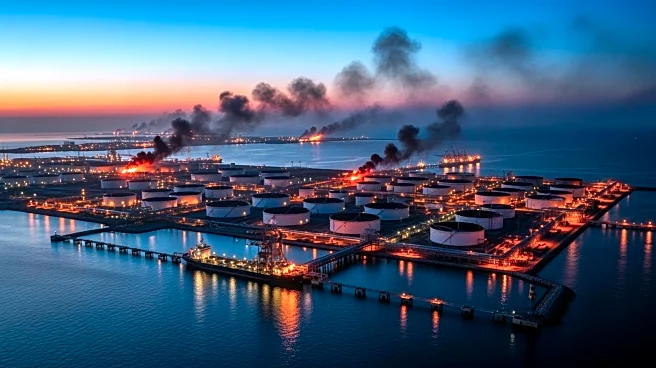
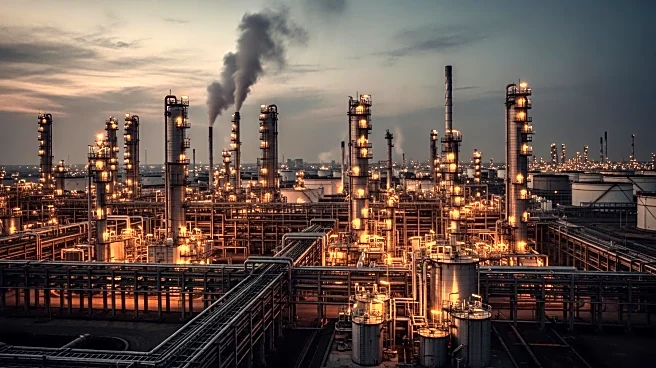
On March 28, Ukrainian drones reportedly targeted the Slavneft-YANOS oil refinery in Yaroslavl, Russia, as part of ongoing military operations. The refinery, one of Russia's largest, is capable of producing over 15 million tons annually. This attack follows
a series of strikes on Russian oil terminals in Leningrad Oblast over the previous nights. Russian forces claimed to have shot down 155 Ukrainian drones across various regions, including Crimea and Moscow, but did not confirm if any drones hit their intended targets. Ukraine considers oil facilities valid military targets due to their role in funding Russia's war efforts.
Why It's Important?
The strikes on Russian oil infrastructure highlight the strategic importance of energy resources in the ongoing conflict between Ukraine and Russia. By targeting these facilities, Ukraine aims to weaken Russia's economic capacity to sustain its military operations. The attacks could further strain global energy markets, as evidenced by the recent rise in oil prices above $100 per barrel. The U.S. has issued a temporary license to stabilize global energy prices, allowing countries to purchase Russian oil stranded at sea. These developments underscore the interconnectedness of military actions and global economic stability.
What's Next?
Continued drone strikes on Russian oil facilities may provoke a stronger military response from Russia, potentially escalating the conflict further. The international community, particularly countries reliant on Russian oil, may face increased pressure to find alternative energy sources. Diplomatic efforts to resolve the conflict could intensify as stakeholders seek to prevent further disruptions to global energy supplies. Monitoring the situation closely will be crucial for policymakers and businesses involved in the energy sector.