




What's Happening?
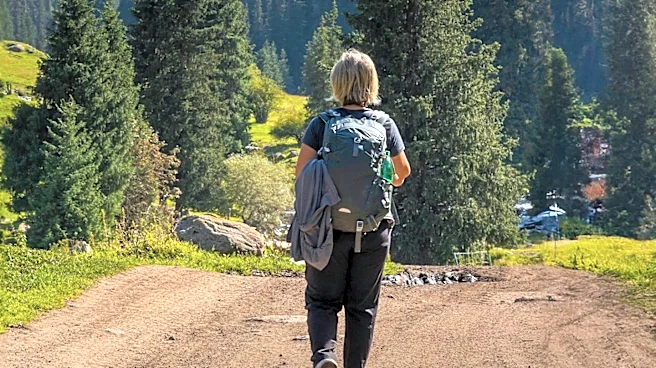
Kyrgyzstan's Ak-Suu district has experienced a significant surge in tourism, with tourist arrivals increasing more than eightfold over the past five years. This growth was highlighted during a working visit by President Sadyr Japarov to the Issyk-Kul
region on November 13, 2026. The district has also seen a nearly 40% rise in individual entrepreneurs and the establishment of new manufacturing facilities, alongside increased investment and industrial production. These developments are supported by ongoing infrastructure upgrades, including improvements to road networks and drinking water supply systems. A major initiative, the Ala-Too Resort national tourism complex, is being prepared for implementation to further boost mountain tourism and create employment opportunities. In the nearby Tyup district, industrial output has more than doubled, and 55 new enterprises have opened, creating 900 jobs. The city of Karakol also saw its industrial output double compared to 2021, reaching 4.6 billion soms ($52.6 million) in the first nine months of 2026, with 33 industrial projects currently underway, generating 1,155 jobs.
Why It's Important?
The substantial increase in tourist arrivals and economic activity in Kyrgyzstan's Ak-Suu district signifies a successful regional development strategy that could serve as a model for other emerging economies. The focus on tourism, coupled with industrial growth and entrepreneurial support, demonstrates a diversified approach to economic prosperity. For the U.S., this trend indicates potential new markets for tourism-related services and investments, particularly in hospitality, infrastructure, and technology. The development of the Ala-Too Resort could attract international visitors, including those from the U.S., seeking unique mountain tourism experiences. Furthermore, the broader economic growth in the region, including the doubling of industrial output in Tyup district and Karakol, suggests an expanding consumer base and potential for increased trade and business partnerships. This regional stability and economic dynamism can contribute to broader geopolitical stability, which is of interest to U.S. foreign policy and economic interests in Central Asia.
What's Next?
The implementation of the Ala-Too Resort national tourism complex is a key next step, expected to further enhance mountain tourism and job creation in the Ak-Suu district. Continued upgrades to road networks and drinking water supply systems will support the growing influx of tourists and residents. The ongoing industrial projects in Tyup district and Karakol are anticipated to further boost employment and economic output. These developments suggest a sustained period of growth and modernization for the region. Local officials will likely continue to monitor the impact of these initiatives on the local economy and infrastructure, potentially leading to further policy adjustments or investment opportunities. The success of these projects could also encourage other regions within Kyrgyzstan to adopt similar development models, fostering broader national economic growth.
Beyond the Headlines
The rapid economic transformation in Kyrgyzstan's Ak-Suu district, driven by tourism and industrial growth, highlights a broader shift in regional economies towards diversification beyond traditional sectors. This development underscores the potential for strategic investments in infrastructure and targeted economic incentives to unlock significant growth in areas previously considered less developed. The emphasis on mountain tourism also points to a growing global demand for experiential travel, which can be a powerful engine for local economies. However, such rapid growth also brings challenges, including the need for sustainable development practices to preserve natural resources and cultural heritage, and ensuring that the benefits of tourism are equitably distributed among local communities. The balance between economic expansion and environmental and social sustainability will be crucial for the long-term success of these initiatives.