





What's Happening?
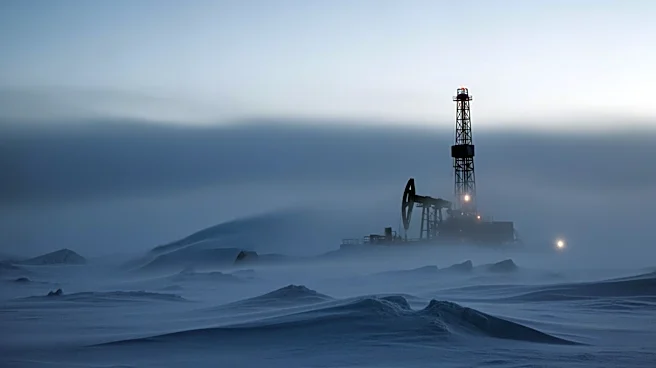
The Arctic National Wildlife Refuge (ANWR) oil lease sale on June 5, 2026, attracted only two bidders, despite the U.S. Bureau of Land Management estimating 11.8 billion barrels of recoverable oil in the area. The sale, mandated by legislation from President
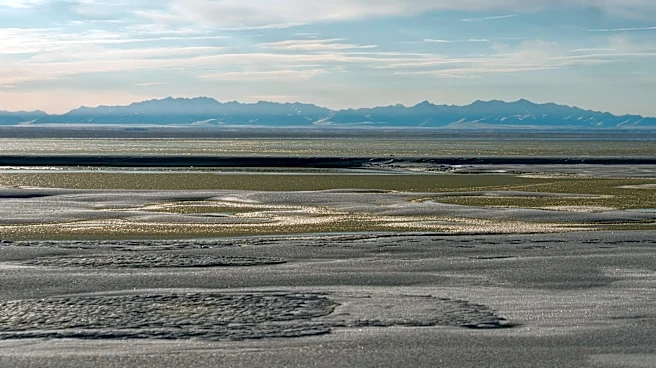
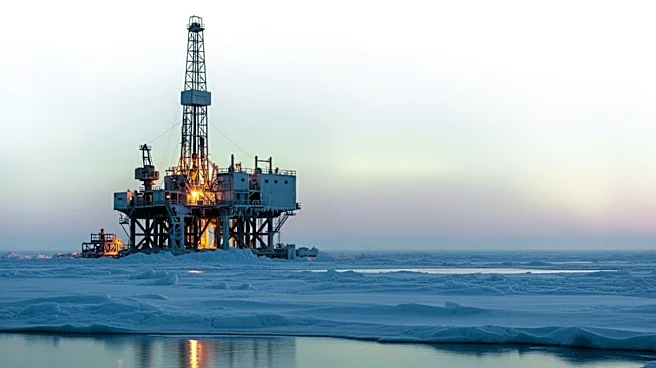
Trump's administration, is part of a series of four required auctions by 2035. The Alaska Industrial Development and Export Authority (AIDEA) and Hex Energy were the only participants, acquiring leases across five tracts. Major oil companies abstained from bidding due to a combination of political cycle risks, environmental, social, and governance (ESG) pressures, and high operational costs associated with Arctic drilling. The ANWR coastal plain, a protected area in northeastern Alaska, has been a contentious site for energy development due to its ecological sensitivity and the political and financial risks involved.
Why It's Important?
The limited participation in the ANWR lease sale highlights significant challenges facing Arctic oil exploration. Major oil companies are deterred by the high political and environmental risks, which include potential permit cancellations by future administrations and intense scrutiny from ESG-focused investors. This situation underscores a broader trend where institutional capital is increasingly cautious about investing in high-risk, high-controversy projects. The absence of major players in the ANWR sale contrasts sharply with a recent lease sale in the National Petroleum Reserve-Alaska (NPR-A), which attracted significant interest and investment. This indicates a preference for areas with established infrastructure and lower political risk, affecting the strategic decisions of energy companies and the future of U.S. energy policy.
What's Next?
The federal government is legally obligated to conduct three more lease sales in ANWR by 2035, regardless of commercial interest. Future auctions will test whether the current barriers to investment, such as political risks and ESG pressures, have shifted. If oil prices rise significantly or if there are changes in federal policy, mid-tier operators might show interest. However, a change in administration could lead to policy reversals, further complicating the investment landscape. Each sale will serve as a barometer for market sentiment and the viability of Arctic oil exploration under evolving regulatory and economic conditions.
Beyond the Headlines
The ANWR lease sale reflects deeper issues in balancing energy development with environmental conservation. The ecological sensitivity of the area, home to diverse wildlife, poses ethical and legal challenges. Indigenous communities are divided, with some opposing development due to cultural and subsistence concerns, while others support it for economic reasons. This complex stakeholder landscape adds layers of social and reputational risk for companies considering investment. The ongoing debate over ANWR's development is emblematic of broader tensions in U.S. energy policy, where economic interests often clash with environmental and social considerations.