






What's Happening?
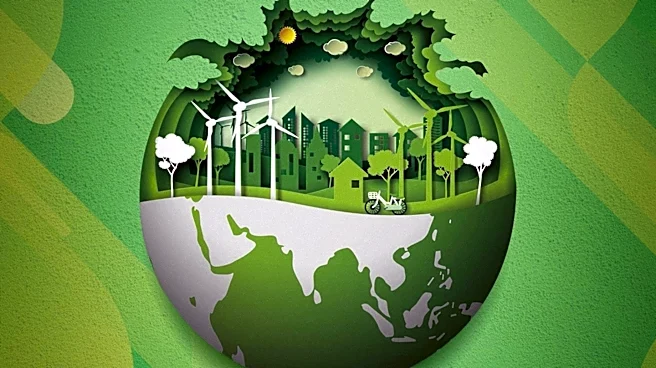
Metropolitan Community College (MCC) is actively expanding its curriculum to integrate sustainability concepts across various programs and courses. The college aims to increase the number of offerings that incorporate environmental science, business ethics,
social equity, and resource management. MCC provides learning opportunities for students pursuing full degrees, individual courses, and non-credit options, connecting sustainability to real-world challenges. Examples of programs with sustainability as a core component include Horticulture, with specializations in sustainable plant science, urban agriculture, and small market farming, and Sustainable Culinary and Baking Management, which focuses on farm-to-table sourcing and food waste reduction. The college also offers credit courses in Integrated Pest Management and Sustainable Food Practices, alongside non-credit community education courses like 3D Hydroponics and Solar Energy.
Why It's Important?
MCC's commitment to sustainability education is vital for preparing a workforce equipped to address contemporary environmental and social challenges. By embedding sustainability into diverse fields, the college is fostering a generation of professionals who can implement environmentally responsible practices in industries ranging from agriculture and culinary arts to civil engineering and HVAC. This initiative not only enhances career readiness but also promotes a broader understanding of ecological literacy and resource stewardship within the community. The availability of both credit and non-credit courses ensures that a wide range of individuals, from degree-seeking students to community members, can access and benefit from this critical education.
What's Next?
MCC continuously updates its Community Education courses each term, ensuring that offerings remain current and relevant to evolving sustainability needs. The college's Horticulture program, for instance, prepares graduates for careers in ecologically sound grounds management, native landscaping, and water conservation. The Small Market Farming specialization covers sustainable small-scale farming, urban food production, and direct-market sales with an environmental stewardship emphasis. These programs are designed to equip students with practical skills for careers where environmental responsibility is central. The ongoing integration of sustainability into the curriculum signifies a long-term commitment to fostering environmental awareness and responsible living.
Beyond the Headlines
The expansion of sustainability education at MCC reflects a growing societal demand for green skills and environmentally conscious practices. This trend suggests a future where sustainability is not just a niche field but an integral part of all professions and daily life. By offering courses in areas like 3D Hydroponics and Solar Energy, MCC is also contributing to the adoption of innovative technologies that can mitigate environmental impact. This educational approach has the potential to cultivate a more informed and proactive citizenry, capable of making sustainable choices in their personal and professional lives, thereby contributing to broader societal resilience and ecological health.