
What's Happening?
A powerful winter storm, named Winter Storm Gianna by the Weather Channel, is poised to impact the East Coast of the United States this weekend. The storm is expected to develop into a bomb cyclone and
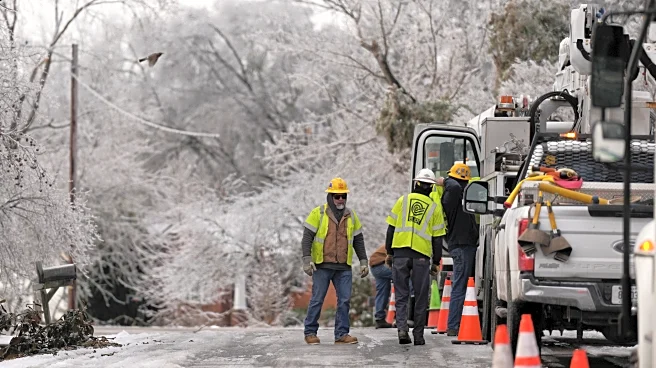
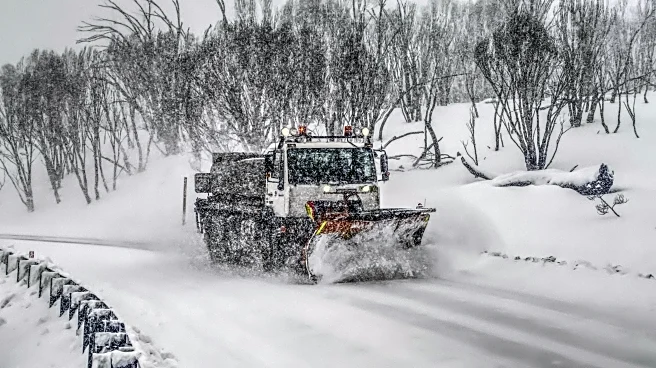
a nor'easter by Sunday, bringing heavy snow, strong winds, and coastal flooding from the Carolinas to New England. Eastern North Carolina is anticipated to experience some of the most severe conditions, with forecasts predicting over a foot of snow and blizzard-like conditions. This could result in the heaviest snowfall the region has seen in over 30 years. The storm's effects are expected to include power outages, hazardous travel conditions, and severe cold, potentially extending as far south as Florida. Winter storm warnings and advisories are in place across the Southeast, with significant snowfall already reported in the North Carolina mountains.
Why It's Important?
The impending storm poses significant risks to public safety and infrastructure across the affected regions. The potential for power outages and impassable roads could disrupt daily life and economic activities, particularly in areas unaccustomed to such severe winter weather. The storm's impact on transportation could affect supply chains and travel plans, while the risk of coastal flooding threatens property and ecosystems along the coast. The storm's timing, coinciding with a full moon, could exacerbate tidal flooding, increasing the potential for damage. The widespread nature of the storm, affecting major cities and rural areas alike, underscores the need for preparedness and coordinated response efforts to mitigate its impact.
What's Next?
As the storm progresses, emergency services and local governments are likely to focus on maintaining public safety and restoring services in affected areas. Residents in the storm's path are advised to prepare for potential power outages and hazardous travel conditions. Authorities may implement road closures and other safety measures to protect the public. The storm's aftermath will likely involve cleanup and recovery efforts, particularly in areas experiencing significant snowfall and flooding. Monitoring of weather conditions and updates from meteorological services will be crucial for ongoing response efforts.